Autism and ABA
Autism spectrum disorder is a brain based disorder. This disorder has several different characteristics that include; social communication challenges, restrictive repetitive behaviors activities and interests. ASD is known to cause significant social communication and behavioral challenges. ASD is a spectrum disorder which means that people who are on the spectrum can fall anywhere from mild to severe and everything in between. The signs of ASD usually begin in childhood. Although there is no cure for autism there are different interventions that can help in the learning of appropriate behavior.
Autism: What we know (and what we don't know yet)
Below is a TED talk by Wendy Chung describing what we already know about ASD and what possible causes have been found.
Below is a TED talk by Wendy Chung describing what we already know about ASD and what possible causes have been found.
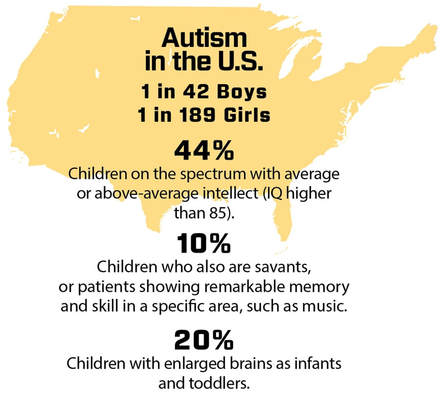
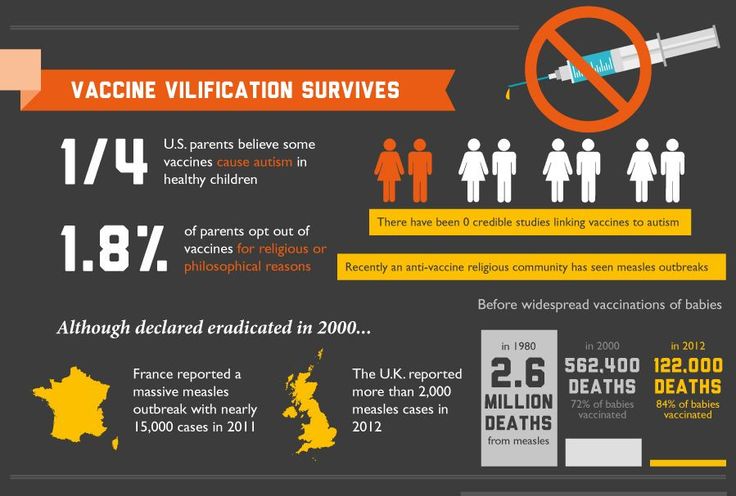
Above is an image that shows the statistics of autism in the U.S. Below is an image that shows the percentages of vaccinations and autism and death rates due to not vaccinating. |
Signs of Autism
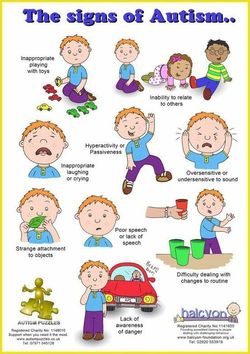
The image above shows some of the possible signs of a child with autism. These signs go along with the spectrum that the child is on, some can be more severe than others |
Possible Causes of Autism
Although there are no proven causes of autism, studies have linked some possible increased risks and decreased risks in people with autism. These risks include:
Although there are no proven causes of autism, studies have linked some possible increased risks and decreased risks in people with autism. These risks include:
- Genetic Factors:The most significant cause for ASD spectrum disorders.
- Common Hypothesis: ASD is cause by the interaction of a genetic predisposition and an early environmental insult.
- Prenatal Risk Factors: Advanced age in either parent at conception, diabetes, bleeding, and use of psychiatric drugs in the mother during pregnancy
- Prenatal Viral Infection:The principal non-genetic cause of ASD. Prenatal exposure to rubellas or cytomegalovirus activates the mother's immune response and may increases the risk for ASD
- Thyroid Problem: This leads to a thyroxine deficiency in the mothers in weeks 8-12 of pregnancy. This has shown changes in the production of the fetal brain leading to ASD.
- Diabetes in Mothers:Diabetes during pregnancy is a significant risk factor for ASD.
- No Risks
- Although there is still a large debate on this topic, researchers have finished a long research on the topic of vaccines causing autism. Research has concluded that autism is not caused by vaccination.
For more information on the causes of autism please click the link below!
The use of applied behavior analysis with students with autism
Students with ASD do not learn the same way as typically developing students. students with ASD will need some extra support in their academics as well as their social interactions, this is where ABA comes in. Applied behavior analysis or ABA is the "Process of systematically applying interventions based upon the principles of learning theory to improve socially significant behaviors to a meaningful degree, and to demonstrate that the interventions employed are responsible for the improvement in behavior" (Baer, Wolf & Risley, 1968; Sulzer-Azaroff & Mayer, 1991)
Students with ASD do not learn the same way as typically developing students. students with ASD will need some extra support in their academics as well as their social interactions, this is where ABA comes in. Applied behavior analysis or ABA is the "Process of systematically applying interventions based upon the principles of learning theory to improve socially significant behaviors to a meaningful degree, and to demonstrate that the interventions employed are responsible for the improvement in behavior" (Baer, Wolf & Risley, 1968; Sulzer-Azaroff & Mayer, 1991)
What is ABA?
Below is a video that explains how ABA came about, what it is and how it is used.
Below is a video that explains how ABA came about, what it is and how it is used.
Below is the article by Baer, Wolf and Risley (1968). This article, like the video above outlines what ABA is, how it is used and why it is used.
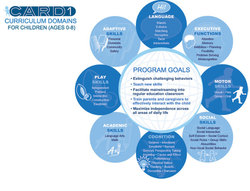
To the left is the curriculum domains for ABA. The middle is the program goals that ABA hope to meet. The circles on the outside are the specific skills that ABA works on.
ABA and Reinforcements
One way that behaviors are taught through ABA is with reinforcements. There are different types of reinforcements including natural and negative. The images below are some types of reinforcements that are used in ABA. Below that is a link to a website that further explains the use of reinforcements.
One way that behaviors are taught through ABA is with reinforcements. There are different types of reinforcements including natural and negative. The images below are some types of reinforcements that are used in ABA. Below that is a link to a website that further explains the use of reinforcements.
The link below is to the applied behavioral strategies website where you can find out more about ABA
Social Stories and ABA
Social stories are used to teach social skills, these can include identifying important social cues in a given situation, understanding another's point of view or feelings, understanding rules, situations or upcoming events. Below is an example of a social story created to help a student with greeting people.
Social stories are used to teach social skills, these can include identifying important social cues in a given situation, understanding another's point of view or feelings, understanding rules, situations or upcoming events. Below is an example of a social story created to help a student with greeting people.
Design and Use of Social Stories
The study below was designed to help people understand how to create and use social stories to teach social skills to children with autism spectrum disorder (ASD). A design-based research was done on students with ASD along with the students was a participation with their families and teachers.
The study below was designed to help people understand how to create and use social stories to teach social skills to children with autism spectrum disorder (ASD). A design-based research was done on students with ASD along with the students was a participation with their families and teachers.
Effectiveness of social stories
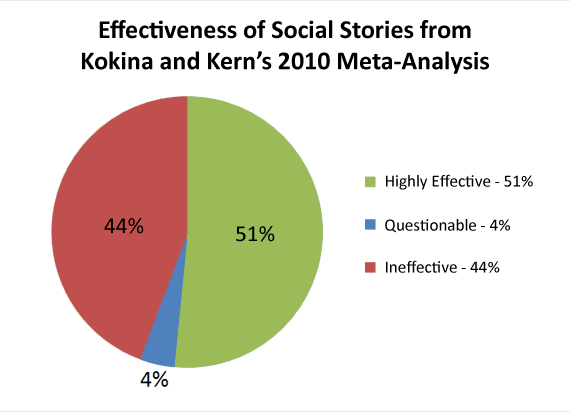
The chart below is from a study that was done on 47 students to find the effectiveness of Social Stories.
http://www.educateautism.com/social-stories/are-social-stories-effective.html
The chart below is from a study that was done on 47 students to find the effectiveness of Social Stories.
http://www.educateautism.com/social-stories/are-social-stories-effective.html
Other helpful sources about ABA and autism
Resources:
http://autismsciencefoundation.org/what-is-autism/
http://www.autism-society.org/what-is/
https://www.autismspeaks.org/family-services/tool-kits/100-day-kit/diagnosis-causes-symptoms
http://discovermagazine.com/2017/jul-aug/autism-spectrum-disorder
http://www.educateautism.com/social-stories/are-social-stories-effective.html
http://autismsciencefoundation.org/what-is-autism/
http://www.autism-society.org/what-is/
https://www.autismspeaks.org/family-services/tool-kits/100-day-kit/diagnosis-causes-symptoms
http://discovermagazine.com/2017/jul-aug/autism-spectrum-disorder
http://www.educateautism.com/social-stories/are-social-stories-effective.html