Autism in an Inclusive Classroom
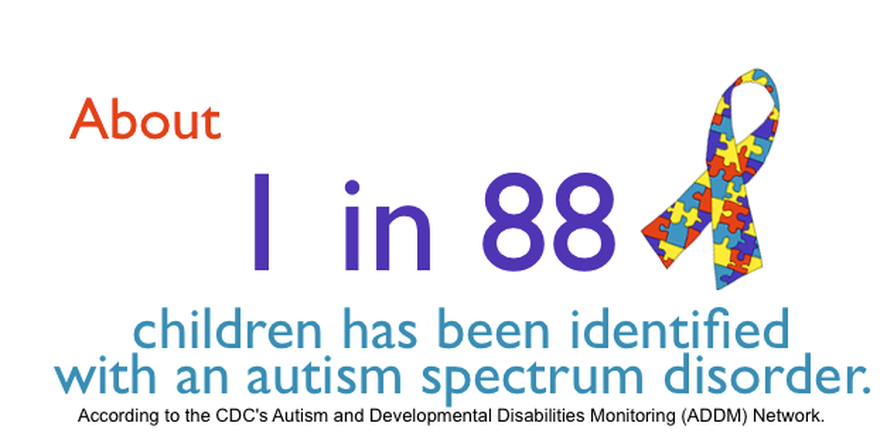
As of 2012, about 1 in 88 children in the United States have been diagnosed with Autism Spectrum Disorder. It affects boys about 4 times more often than it affects girls. It is a neurodevelopment disorder, meaning that as a child grows the disorder affects brain functions such as one's learning ability, emotions, self- control and memory. Symptoms of Autism are generally detected by the time the child is three years old. Autism affects how information gets processed in a person's brain by changing how a nerve cell passes the electrical or chemical signal to another cell. Young children usually show signs of Autism, such as repetitive stacking up objects, by the age of two. There is no known cure for Autism, though early intervention has been shown to significantly improve a child's future. There have been a few cases where children have "recovered" from Autism that are being researched heavily.
Because of Autism's prevalence, it is extremely likely that all teachers will teach Autistic students. It is extremely important to know how to reach these students and create a positive classroom environment. Autism affects a child's social development, communication, and interests. It can be hard to work with Autistic children because you feel a noticeable discomfort and separation when interacting with them. With a cognitively "normal" student, a teacher will often bend down, look them in the eye, and maybe even touch their shoulder to connect when speaking. All of these actions can be threatening or scary to an Autistic child so teachers must relearn what it means to connect with them. IDEA clearly mandates that all children are guaranteed a free and appropriate education in a least restrictive environment. Sometimes, due to the challenging behaviors associated with Autism, a separate classroom or special school is actually less restrictive for them.
Because of Autism's prevalence, it is extremely likely that all teachers will teach Autistic students. It is extremely important to know how to reach these students and create a positive classroom environment. Autism affects a child's social development, communication, and interests. It can be hard to work with Autistic children because you feel a noticeable discomfort and separation when interacting with them. With a cognitively "normal" student, a teacher will often bend down, look them in the eye, and maybe even touch their shoulder to connect when speaking. All of these actions can be threatening or scary to an Autistic child so teachers must relearn what it means to connect with them. IDEA clearly mandates that all children are guaranteed a free and appropriate education in a least restrictive environment. Sometimes, due to the challenging behaviors associated with Autism, a separate classroom or special school is actually less restrictive for them.

Information from Autism Speaks
How Common is Autism?
Autism statistics from the U.S. Centers for Disease Control and Prevention (CDC) identify around 1 in 68 American children as on the autism spectrum–a ten-fold increase in prevalence in 40 years. Careful research shows that this increase is only partly explained by improved diagnosis and awareness. Studies also show that autism is four to five times more common among boys than girls. An estimated 1 out of 42 boys and 1 in 189 girls are diagnosed with autism in the United States.
ASD affects over 3 million individuals in the U.S. and tens of millions worldwide. Moreover, government autism statistics suggest that prevalence rates have increased 10 to 17 percent annually in recent years. There is no established explanation for this continuing increase, although improved diagnosis and environmental influences are two reasons often considered.
What Causes Autism?
Not long ago, the answer to this question would have been “we have no idea.” Research is now delivering the answers. First and foremost, we now know that there is no one cause of autism just as there is no one type of autism. Over the last five years, scientists have identified a number of rare gene changes, or mutations, associated with autism. A small number of these are sufficient to cause autism by themselves. Most cases of autism, however, appear to be caused by a combination of autism risk genes and environmental factors influencing early brain development.
In the presence of a genetic predisposition to autism, a number of nongenetic, or “environmental,” stresses appear to further increase a child’s risk. The clearest evidence of these autism risk factors involves events before and during birth. They include advanced parental age at time of conception (both mom and dad), maternal illness during pregnancy and certain difficulties during birth, particularly those involving periods of oxygen deprivation to the baby’s brain. It is important to keep in mind that these factors, by themselves, do not cause autism. Rather, in combination with genetic risk factors, they appear to modestly increase risk.
A growing body of research suggests that a woman can reduce her risk of having a child with autism by taking prenatal vitamins containing folic acid and/or eating a diet rich in folic acid (at least 600 mcg a day) during the months before and after conception.
Increasingly, researchers are looking at the role of the immune system in autism. Autism Speaks is working to increase awareness and investigation of these and other issues, where further research has the potential to improve the lives of those who struggle with autism. Promoting and teaching adaptive behavior as early as possible is essential for long term growth.
How Common is Autism?
Autism statistics from the U.S. Centers for Disease Control and Prevention (CDC) identify around 1 in 68 American children as on the autism spectrum–a ten-fold increase in prevalence in 40 years. Careful research shows that this increase is only partly explained by improved diagnosis and awareness. Studies also show that autism is four to five times more common among boys than girls. An estimated 1 out of 42 boys and 1 in 189 girls are diagnosed with autism in the United States.
ASD affects over 3 million individuals in the U.S. and tens of millions worldwide. Moreover, government autism statistics suggest that prevalence rates have increased 10 to 17 percent annually in recent years. There is no established explanation for this continuing increase, although improved diagnosis and environmental influences are two reasons often considered.
What Causes Autism?
Not long ago, the answer to this question would have been “we have no idea.” Research is now delivering the answers. First and foremost, we now know that there is no one cause of autism just as there is no one type of autism. Over the last five years, scientists have identified a number of rare gene changes, or mutations, associated with autism. A small number of these are sufficient to cause autism by themselves. Most cases of autism, however, appear to be caused by a combination of autism risk genes and environmental factors influencing early brain development.
In the presence of a genetic predisposition to autism, a number of nongenetic, or “environmental,” stresses appear to further increase a child’s risk. The clearest evidence of these autism risk factors involves events before and during birth. They include advanced parental age at time of conception (both mom and dad), maternal illness during pregnancy and certain difficulties during birth, particularly those involving periods of oxygen deprivation to the baby’s brain. It is important to keep in mind that these factors, by themselves, do not cause autism. Rather, in combination with genetic risk factors, they appear to modestly increase risk.
A growing body of research suggests that a woman can reduce her risk of having a child with autism by taking prenatal vitamins containing folic acid and/or eating a diet rich in folic acid (at least 600 mcg a day) during the months before and after conception.
Increasingly, researchers are looking at the role of the immune system in autism. Autism Speaks is working to increase awareness and investigation of these and other issues, where further research has the potential to improve the lives of those who struggle with autism. Promoting and teaching adaptive behavior as early as possible is essential for long term growth.
“Before Lindsay had speech, we could only guess at what was causing her so much pain. It was truly awful to feel so powerless to help your own child. And when she was aggressive or hurting herself, there was no way I was going to sit back and take my time to figure out what was causing it. I had to intervene right away either by moving away from her or restraining her arms. Once we learned to see her behaviors as her form of communication, we could begin to understand the purpose behind them. Then we could really focus on strengthening the few communication skills she had. Eventually, her problem behaviors became less and less frequent as they were replaced by language.”
- BK, a father
How Do I Deal with the Challenging Behaviors Associated with Autism?
First, take on the mentality that sometimes, a challenging behavior is the only way an Autistic person knows how to cope with a situation. Challenging, aggressive and self-injury behaviors are very often a product of an individual's frustration or inability to communicate what he/ she wants or needs. Intervention is necessary to help a student overcome challenging behaviors and learn new coping mechanisms. Without intervention, these behaviors can get much worse and harder to deal with especially as a child matures into adulthood. Promoting and teaching adaptive behavior as early as possible is essential for long term growth. The longer challenging behaviors are around, the more difficult it is to replace them with appropriate behavior. Challenging behaviors are likely to become more frequent and exaggerated as you try to address and diminish them. Anyone coming in contact with the child should be prepared to be a part of the consistent treatment plan for the behavior. A crisis situation however is not the time to teach something new or make a point. Sometimes a strict behavior plan must be abandoned when it does not properly address the crisis at hand.
Many parents make subtle adjustments to adapt to their child’s behavior, but over time, they can drift into patterns that become a “new normal.” This may mean they no longer take their child shopping because of his aggression in the community. They may no longer bring him to visits with family or friends because he is disruptive, and so they lose their supports and relationships. They may accept that a child is an early riser, but then 6 AM becomes 5 AM, then 4 AM, and everyone is exhausted and no one is functioning well. Over time, these subtle adjustments (sometimes called behavioral drift) can become difficult to change, and can accumulate to limit the child’s and his family’s access to many important things in life.
Challenging Behaviors Have the Power To:
- Interrupt academic learning and as a result limit long term growth and development
- Limit experiences and keep a person out of many opportunities for growth over his lifespan, including play dates, mainstream classrooms, recreational options, and eventually his work options, living conditions and ability to be integrated into the community
- Cause physical decline, pain, injury, especially when aggression and self-injury are involved
- Compromise an individual’s psychological state, resulting in depression, stress, anxiety, and reduced self-confidence and self-respect
- Impair social relationships, as well as long term interactions with siblings, parents and other family members I Affect finances as a result of employability, medical and supervision expenses
- Reduce independence and choice
Creating an Inclusive Classroom for Autistic Students
There is no "magic recipe" for including Autistic students in your classroom. All students have unique learning, behavioral, communication, and social skills needs. Getting to know your student is crucial for creating an environment where they can learn and grow. Students must be able to benefit from their inclusion in a general education classroom in order for it to be least restrictive environment. Here are some great resources to turn to when trying to make an inclusive classroom that is welcoming for all of your students:
Ten Ideas for Inclusive Classrooms: http://www.paulakluth.com/readings/autism/article-autism-tenideas/
Strategies to Promote Successful Inclusion Experiences http://www.child-autism-parent-cafe.com/autism-students-in-inclusive-classrooms.html
Supporting Students with Autism: 10 Ideas for Inclusive Classrooms http://www.child-autism-parent-cafe.com/supporting-students-with-autism.html
Inclusion of Students with Autism Spectrum Disorders http://education.jhu.edu/PD/newhorizons/Exceptional%20Learners/Autism/Articles/Inclusion%20of%20Students%20with%20Autism%20Spectrum%20Disorders/
6 Strategies for Teaching Students with Autism http://www.teachthought.com/teaching/autism-awareness-month-6-strategies-for-teaching-students-with-autism/
7 Steps for Setting up a Stelar Autism Classroom http://theautismhelper.com/steps-setting-stellar-autism-classroom-visuals/
iPad Apps
A great way to reach your students with Autism is to incorporate iPad apps into the classroom. A great resource for finding more appropriate and useful Apps can be found at http://www.autismspeaks.org/autism-apps. There you can sort through hundreds of apps and sort them based on intended age, intended skill, compatible devices, and key words. Here are some examples of Apps available for working with children with Autism. You can click on the photos directly to link to the App's page at the iTunes store.
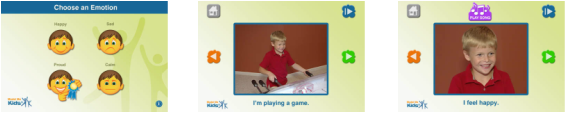
Autism Emotion by Model Me Kids, LLC uses music and photos to help teach children corresponding emotions.
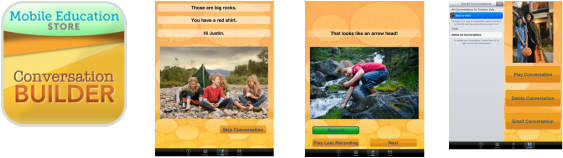
Conversation Builder by Mobile Education Store is a conversation simulator designed to help elementary aged children learn how to have multi-exchange conversations with their peers in a variety of social settings.
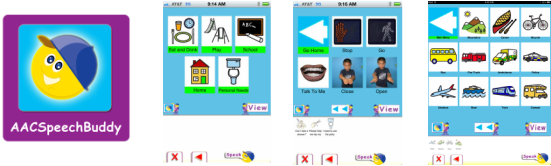
AACSpeechBuddy by Don McCarty offers a full-featured flexible and easy to use alternative communication system solution for people who have trouble communicating. You can use their 4000+ stock images or photographs/ more individualized pictures of your own.
Latest Research on Autism
Optimal Outcomes in Individuals with a History of Autism, The Journal of Child Psychology and Psychiatry http://onlinelibrary.wiley.com/doi/10.1111/jcpp.12037/full
Methylomic analysis of monozygotic twins discordant for autism spectrum disorder and related behavioral traits, Molecular Psychiatry http://www.nature.com/mp/journal/v19/n4/full/mp201341a.html
Detection of Clinically Relevant Genetic Variants in Autism Spectrum Disorderby Whole-Genome Sequencing, American Journal of Human Genetics http://www.sciencedirect.com/science/article/pii/S0002929713002814
Prevalence of Autism Spectrum Disorders, National Center on Birth Defects and Developmental Disabilities http://www.cdc.gov/mmwr/preview/mmwrhtml/ss6103a1.htm?s_cid=ss6103a1_w