
Impact of Special Needs
  • BLOG 2017
  • IMPACT
    • History of Special Education Christina Pressley
    • INQUIRY >
      • RESEARCH AVENUES >
        • Marshall Memo
    • SYLLABUS >
      • Norms
      • Council for Exceptional Children
      • Flight Practice
      • Ladder of Feedback
      • Marshmallow Challenge
      • MeMoves!
      • National Teaching Norms
      • Scavenger Hunt
      • Unthinkables
  • FOUNDATIONS
    • Common Core >
      • Mathematics >
        • Math Graphic Organizers
        • Math: Subitizing and Ten Frames
        • Math Inclusion Resources and Strategies
      • Literacy >
        • Alphabet Awareness
        • Classroom Labels
        • Close Reading Strategies
        • The Daily Five
        • Dialogic and Guided Reading
        • Phonics Instruction
        • Phonological Awareness
        • Story Grammar Markers
        • Writing
      • TECHNOLOGY RESOURCES FOR LEARNING >
        • ACCESSIBLE INSTRUCTIONAL MATERIALS
        • Assistive Technology >
          • Assistive Technology Andrew
        • The Flipped Classroom in SPED
        • Science >
          • STEM
        • WEBSITES FOR LEARNING >
          • Web 2.0
          • cool tools
    • IEP >
      • Assessment
      • Terminology
      • Accommodations >
        • Assistive Technology >
          • Technology
          • AIM
        • MCAS Accommodations
      • Documents
      • Goals and Objectives
      • Transition Services >
        • Early Childhood Transition
      • Early Intervention
      • 504 Plans
    • INCLUSION >
      • Child Study Teams >
        • CST Report (Action Plans)
      • DCAP
      • RTI >
        • RTI in SLD Determination Lauren A
        • MA Tiered System of Supports
      • Observations
      • PALS: PEER ASSISTED LEARNING STRATEGIES
      • Para Educator
    • DISABILITY AWARENESS >
      • IRIS Resources STAR Legacy Modules
    • EDUCATIONAL STANDARDS >
      • 21st Century Skills
      • Common Core
      • IDEA >
        • Dear Colleague
        • ADA Americans with Disability Act
      • Special Education History >
        • Timelines in Special Education
    • FAMILY >
      • DIVERSITY
      • ADA and ADULTHOOD
      • Stigma in Special Needs in Latino Family Emily Burdick
  • TOPICS
    • Transgender Youth
  • LEARNING THEORIES
    • LEARNING THEORIES A-G >
      • ABA Jenna
      • All Kinds of Minds
      • Bloom's Taxonomy
      • Behaviorism
      • Bronfenbrenner’s Theory
      • Child Development
      • Cognitivism
      • Constructivism
      • GRIT
      • Growth Mindset
    • LEARNING THEORIES H-Z >
      • Kinesthetic Learning Eilish Reynolds
      • Learning Styles
      • Meaning Making
      • Motivation
      • Neuroscience
      • Building Relationships Katherine Bonilla
      • Social Learning Theory
      • Teaching for Understanding
      • Thinking Maps
      • UDL >
        • Assistive Technolog Jacqueline
        • UDL and the Common Core
        • UDL-Jenny/Lauren
      • Visible Thinking
  • DISABILITIES
    • AUTISM (ASD) >
      • Autism >
        • Autism Family Info Lindsey Blackman
        • Pink on the Spectrum Sara Cane
        • Autism Troy Sargent >
          • Autism and ABA Haley Award
          • Autism Janine Steinhauser
          • Autism James McDonough
        • Autism Rebecca Siegel
        • Autism and Language
        • Autism Kat
        • Autism and Adulthood
        • Autism in an Inclusive Classroom Kathryn N
        • Autism Dana Moody
        • Autism Non-Verbal Justin
      • ASD Resources
      • Autism-Nicky >
        • ABA in Autism Intervention Lauren C
      • Asperger's Syndrome Leeanne
    • COMMUNICATION >
      • Apraxia Victoria >
        • Apraxia Gabrielle D'Avolio
      • Communication Resources >
        • Expressive Language-Chelsey
      • Select Mutism
    • DEVELOPMENTAL DELAY >
      • Fine and Gross Motor Devel.-Denise >
        • Motor Articles
    • EMOTIONAL (BEHAVIOR) >
      • Bipolar Disorder Cailey >
        • Bipolar Disorder Caitlin Worthen
      • Behavior Resources
      • Mental Health Needs in College Peter Rakes
      • Relational Aggression Meghan Lederhos
      • Emotional Apps Katherine Bonilla
      • Trauma Supportive Practice Samantha Sinotte
    • HEALTH >
      • Cancer
      • ADHD and ADD >
        • ADHD Isabella Delmoral
        • ADHD Julia
        • ADHD Olivia Pizzi
        • ADD/ADHD >
          • ADHD Jenny/Lauren
          • ADHD Sarah Morgenthaler
      • Health Resources
    • INTELLECTUAL >
      • Acquired Brain Injury >
        • Intellectual Resources
      • Down Syndrome
      • Down Syndrome Jennifer Whitman
      • Prader-Willi Syndrome Samantha Curtis
    • NEUROLOGICAL >
      • Brain Development-Kate
      • Memory-Sarita
      • EXECUTIVE FUNTIONING >
        • Executive Functioning Disorder Laura Brady
      • Rett Syndrom Brycelyn
      • SENSORY PROCESSING DYSREGULATION >
        • SI Resources >
          • Sensory Integration-Steph >
            • SI Reference Articles
      • Fetal Alcohol Syndrome-Mary >
        • Fetal Alcohol Syndrome Elizabeth Watts
    • PHYSICAL >
      • Hearing Disability Rachel Jones
      • Physical Resources
      • Student Integration After Hospitalization Kathryn R
    • SENSORY >
      • HEARING >
        • Hearing Loss Yan Li Xu
        • Hearing Impairment Brianne Syring
        • Hearing Resources
        • Deaf and Hard of Hearing Brianna Normile
      • Sensory Processing Disorder Mikaela Newell
      • VISION >
        • Vision Resources
    • SPECIFIC LEARNING >
      • SLD Elizabeth Mossop
      • NVLD Nicole Snyder
      • LD Resources >
        • Dyscalculia Lily Chase-Lubitz
        • Dysgraphia Erin Bruce
        • Reading >
          • Dyslexia-Anthony >
            • Dyslexia Lily Montagna
            • Dyslexia Victoria Small
            • Dyslexia 2 Tiffany
            • Dyslexia Meghan
            • Dyslexia Colleen Talbot
          • Early Literacy Resources
          • LD and IDEA Issue
          • Reading by the Rules
        • Content
        • Math
        • Writing
        • Technology >
          • Reading Comprehension Strategies Meredith Chen
        • Teaching
    • TWICE EXCEPTIONAL >
      • Twice Exceptional Articles
      • Twice Exceptional Students Kelcy West
      • Twice Exceptional-Melissa
  • BEHAVIOR
    • CLASSROOM MANAGEMENT >
      • A-J >
        • 21st Century Learning
        • Behavior Modification >
          • Behavior Management Jon Weinberger
        • Bloom's Taxonomy
        • Circle of Friends
        • Collaborative Problem Solving
        • Culturally Responsive Pedagogy
        • The Daily Five
        • Differentiated Instruction
      • K-Z >
        • Kids and War
        • MeMoves!
        • Responsive Classroom
        • Socia Skills Curriculums Jessica Fox
        • Social & Emotional Learning Carol Yourman
        • Social Thinking
        • Strategies for Aggression-Jim
        • Universal Design for Learning
    • PREVENTING BULLYING >
      • Good Play Project
  • PROJECTS 2018
    • INQUIRY >
      • A-K
      • L-Z

Trauma Supportive Practices in the Classroom


Picture
Understanding trauma is about changing the helping paradigm from “What is wrong with you?” to “What happened to you?”
Student exposure to trauma has been an issue that tends to be ignored in the classroom.  With recent studies, an estimated that half of the students in America have witnessed at least one or more serious types of traumatic events in their childhood, that's around 35 million children.  This plays a negative role in the child's brain development as well as the student's ability and success in the classroom.  If left untreated, the chances of that student developing severe mental and health problems increases dramatically.  Acknowledging the presence of trauma in your classroom, and working together with your school and community resources will give the students the skills and resources to succeeded a create a more positive school environment.  
Picture
FPL is an abbreviation for "federal poverty level." A family of four at 400% FPL would be considered making around $94,000 a year. A child in a family making the current poverty level, which is around $23,000, is more likely to experience trauma.
Picture
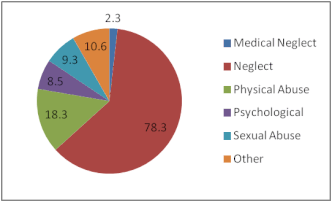
Neglect makes up the majority of maltreatment against children which can contribute to childhood trauma. Neglect can include physical, medical, educational, or emotional neglect.

Creating a Trauma Sensitive Classroom

The first step in creating a trauma sensitive classroom is forcing a shift in your thought processes behind a students behavior.  Instead of focusing on individual behaviors, ask yourself what happened to this child to cause the behaviors to occur. Understanding the whole child is key in building a positive relationship and working together with the family and community to support the child.  Key strategies and implementations that can be transferred to your classroom include:
  • Recognize and understand the symptoms that the child shows as a result of his/her trauma 
  • Ask questions to parents and administrators to develop a deeper understanding of the students trauma
  • Reach out to school and/or community resources to seek assistance for the student and family, for example in school counseling, housing assistance, family counseling, domestic abuse resources and help
  • Offer choices and frequent positive praise 
  • Constant check-ins which opens up a dialogue allowing the student to discuss issues
  • Avoid punishments that result in rejection
  • The behaviors are a result of where the student is emotionally and consider that when administering discipline  
  • If applicable implement a school wide positive behavior supports 
  • Teach and model deescalation techniques 
  • Create a consistent and safe environment  
"Relationship is the evidence based practice" - Dr. Allison Jackson 

Samantha Sinotte
​August 2017

Traumatic events include:

  • Exposure or direct sexual/physical ​​abuse
  • Neglect
  • Violence
  • Poverty
  • Bullying
  • Constant displacement 
  • Emotional abuse 
  • Accidents
  • Medical Crisis 
  • Other specific incidents or events that cause emotional or physical psychological  harm 
Picture

Trauma in the classroom looks like:

  • Inability to self regulate
  • Struggle academically and emotionally 
  • Negative self worth​
  • Delayed coping skills 
  • Extreme switch in behaviors
  • Difficulty forming relationships
  • Academic and behavioral regression

Cognitive Behavioral Intervention (CBI) 
Picture
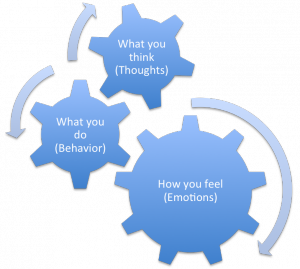
Students who face traumatic events in their life are more likely to experience behavioral concerns in school.  Cognitive Behavioral Intervention (CBI) is a research based approach to help students begin controlling their own behaviors rather than introducing external rewards or enforcing punishments to teach correct behaviors.  Students are taught how to use their inner voice, or "self talk" in order to solve a problem or prevent themselves from getting upset.  The focus of CBI is to shift the students from focusing on "what to think" to "how to think" and how they can use their own thinking strategies to calm themselves down.  Teachers can teach these skills through modeling and role playing appropriate behaviors and interactions between peers, positive reinforcement and feedback when a student appropriately attempts to solve a problem independently, teaching specific deescalation and calming techniques, and thinking aloud during a problem.

Successful steps for CBI include:
  1. Think before acting
  2. Distinguish the problem
  3. Determine solutions
  4. Identify consequences for each solution
  5. Pick a solution and follow it  


 For example:
                                   
John pushes Thomas during a game of basketball at recess.  At the beginning of the year, Thomas                                               would have pushed him back, causing both students to get more upset.  Now, through CBI, and teacher               
modeling how to appropriately handle a problem, Thomas is able to be aware that he is upset and he                                             decides to take a breath to calm himself down first.  He then tells John that he does not like when he                                             pushes him, and John does not push him again.        


Picture
Calm down cards allow younger students to visually see choices and techniques they can use to help calm themselves down.

Agencies and Resources
for Educators and Parents 

 

Picture
Picture
Picture
Picture
Proudly powered by Weebly