|

|

DID YOU KNOW?
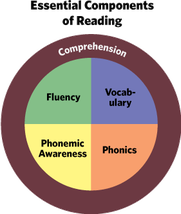
Students with Autism Spectrum Disorder often exhibit advanced reading skills, but find it challenging to understand what they have read. Comprehension difficulties in these students can be overshadowed by their exceptional strengths in other reading components, and as a result are often left unaddressed.
There are some theories as to why students with ASD have difficulty with comprehension. The lack in social communication skills associated with ASD students may impact their ability to comprehend inferential information from a text. In some cases, it the way in which the comprehension question is asked which effects the student's ability to answer. Whatever the reason, it is important to recognize that these students can (and usually do) understand what they are reading, and are lacking the skills necessary to demonstrate their understanding.
Students with Autism Spectrum Disorder often exhibit advanced reading skills, but find it challenging to understand what they have read. Comprehension difficulties in these students can be overshadowed by their exceptional strengths in other reading components, and as a result are often left unaddressed.
There are some theories as to why students with ASD have difficulty with comprehension. The lack in social communication skills associated with ASD students may impact their ability to comprehend inferential information from a text. In some cases, it the way in which the comprehension question is asked which effects the student's ability to answer. Whatever the reason, it is important to recognize that these students can (and usually do) understand what they are reading, and are lacking the skills necessary to demonstrate their understanding.
|
This Weebly page shares information, reading interventions, strategies, and research which address how to support reading comprehension in students with ASD. While the content of this page focuses on ASD related comprehension information, some resources can be used to better support all students who have difficulty with reading comprehension. |

|
Articles and websites about ASD and Reading Comprehension

Tell Me About the Story: Comprehension Strategies for Students with Autism
- Build background knowledge
- Teacher modeled think-aloud
- Drama -- act it out
- Reciprocal teaching
- Retelling

Visualizing and Verbalizing® Program
for Cognitive Development,
Comprehension, & Thinking
Lindamood-Bell has pioneered programs to develop the sensory-cognitive processes that underlie reading and comprehension.
for Cognitive Development,
Comprehension, & Thinking
Lindamood-Bell has pioneered programs to develop the sensory-cognitive processes that underlie reading and comprehension.

It's All About The Story!
An interactive guide using the Story Grammar Marker for parents and educators of children with Asperger's syndrome, Autism, and related communication disorders by Maryellen Rooney Moreau.
An interactive guide using the Story Grammar Marker for parents and educators of children with Asperger's syndrome, Autism, and related communication disorders by Maryellen Rooney Moreau.

Reading program improves brain connectivity in students with autism
"According to a pair of small studies, a reading program that capitalizes on the strengths of students with autism both improves their comprehension and establishes new connections between areas of the brain involved in understanding language."

Into the Book: Teaching Reading Comprehension Strategies
A reading comprehension resource for elementary students and teachers focusing on eight research-based strategies: Using Prior Knowledge, Making Connections, Questioning, Visualizing, Inferring, Summarizing, Evaluating and Synthesizing. Includes online interactive activities and 15-minute video programs.
A reading comprehension resource for elementary students and teachers focusing on eight research-based strategies: Using Prior Knowledge, Making Connections, Questioning, Visualizing, Inferring, Summarizing, Evaluating and Synthesizing. Includes online interactive activities and 15-minute video programs.
Video resources explaining comprehension difficulties in students with ASD, and effective strategies
|
|
|
|
Scholarly articles about ASD and how it effects reading comprehension
Changes in intrinsic connectivity of the brain's reading network following intervention in children with autism
The Department of Psychology at the University of Alabama at Birmingham
Murdaugh, Maximo, Kana
The Department of Psychology at the University of Alabama at Birmingham
Murdaugh, Maximo, Kana
|
Exploration of Strategies for Facilitating the Reading Comprehension of High-Functioning Students with Autism Spectrum Disorders
Journal of Autism and Developmental Disorders, Vol. 34, No. 2, April 2004 (© 2004) Irene M. O’Connor and Perry D. Klein |
The Impact of Reading Intervention on Brain Responses Underlying Language in Children With Autism
Autism Res 2016, 9: 141-154. VC 2015 International Society for Autism Research, Wiley Periodicals, Inc. Donna L. Murdaugh, Hrishikesh D. Deshpande, and Rajesh K. Kana |
Improving Comprehension of Narrative Using Character Event Maps for High School Students With Autism Spectrum Disorder
Journal of Special Education, Vol. 49, No. 1 28-38, May 2015
Pamela Williamson, Christina R. Carnahan, Nicole Birri, Christopher Swoboda
Journal of Special Education, Vol. 49, No. 1 28-38, May 2015
Pamela Williamson, Christina R. Carnahan, Nicole Birri, Christopher Swoboda
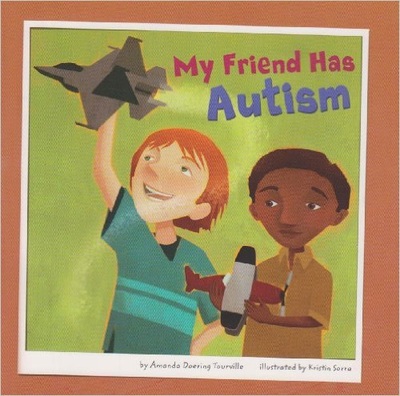
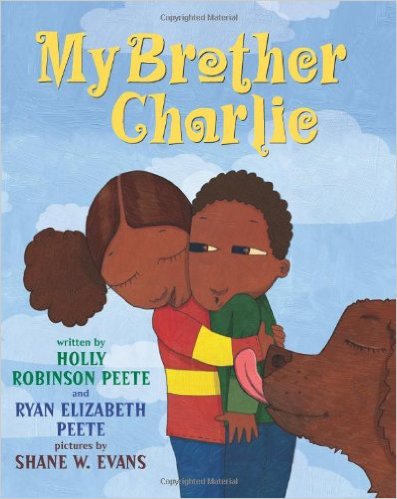
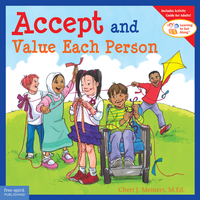
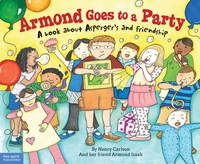
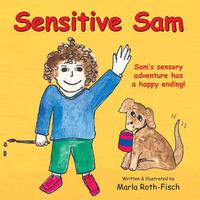
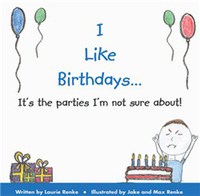
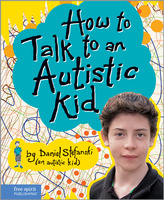
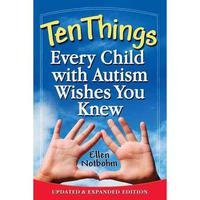
Children's books about Autism
(To learn more about the book, click on the picture)
(To learn more about the book, click on the picture)
|
|
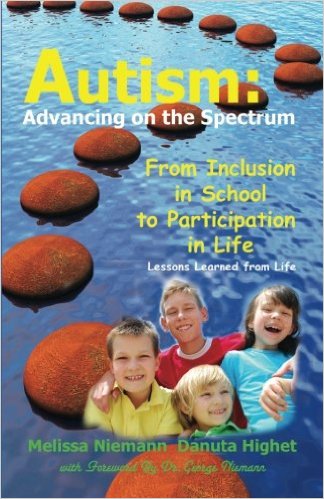
ASD resources for adults
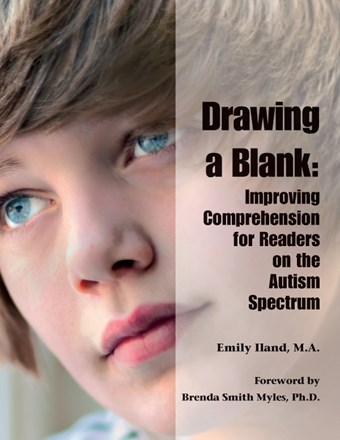
(To learn more about the book, click on the picture)
(To learn more about the book, click on the picture)
|
|


Additional Autism resources:
Aiding Comprehension of Individuals with Autism Spectrum Disorders During One-on-One Interactions
6 Inclusion Strategies for Students with Autism Spectrum Disorders
Visual Schedules for Students with Autism
Visual Communication Supports for Students with Autism PPT
5 Great Reading Comprehension Apps For Autistic ChildrenLiteracy Instruction for Individuals with Autism, Cerebral Palsy, Down Syndrome and Other Disabilities
Aiding Comprehension of Individuals with Autism Spectrum Disorders During One-on-One Interactions
6 Inclusion Strategies for Students with Autism Spectrum Disorders
Visual Schedules for Students with Autism
Visual Communication Supports for Students with Autism PPT
5 Great Reading Comprehension Apps For Autistic ChildrenLiteracy Instruction for Individuals with Autism, Cerebral Palsy, Down Syndrome and Other Disabilities