Deaf and Hard of Hearing Students

What is a hearing impairment?
The individuals with Disabilities equation Act (IDEA) describes a hearing impairment as "an impairment in hearing, whether permanent or fluctuating, that adversely affects a child's educational performance but id not included under the definition of 'deafness'."
When a hearing loss is above 90 decibels, it is then considered deafness.
Who is affected and what are the signs?
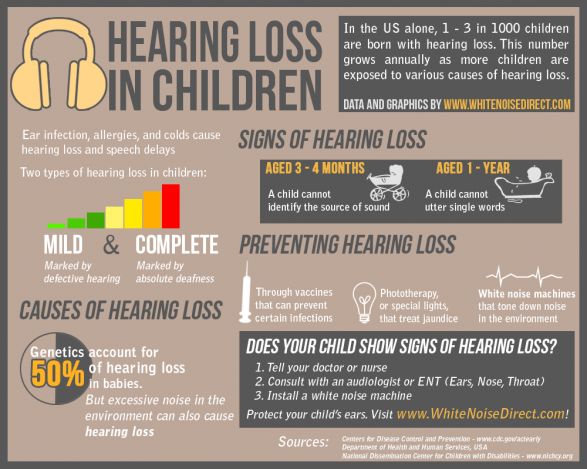
~ 1 to 3 out of 1,000 babies are born with hearing loss each year
~ 50% of babies born with hearing loss is due to Genetic factors.
~ Some children experience hearing loss from fluid in their hear from an ear infection. This can also cause delays in a child's speech.
~ Illness, injuries, certain medication, and loud noises can also cause hearing loss in children and adults.
~ A child might have hearing loss if they:
- do not turn their head to the source of sound from birth to 3-4 months
- do not say single words, such as "mama" or "dada" by the age of 1
- hear some sounds, but not others
~ 1 to 3 out of 1,000 babies are born with hearing loss each year
~ 50% of babies born with hearing loss is due to Genetic factors.
~ Some children experience hearing loss from fluid in their hear from an ear infection. This can also cause delays in a child's speech.
~ Illness, injuries, certain medication, and loud noises can also cause hearing loss in children and adults.
~ A child might have hearing loss if they:
- do not turn their head to the source of sound from birth to 3-4 months
- do not say single words, such as "mama" or "dada" by the age of 1
- hear some sounds, but not others
How does hearing loss affect the student?
Deaf and hard of hearing students have delays in development of speech and language
~Vocabulary:
-Vocabulary development is much slower.
-Students learn concrete words like dog, red, jump, and five a lot easier than abstract words like before, equal to, and
jealous.
-Also have difficulty with words that have multiple meanings, such as rose (flower or to get up) or bank (river or where you
put money).
-Students that are hard of hearing require intervention to narrow the gap between the vocabulary of students with normal hearing.
~ Sentence Structure:
- Hard of hearing students comprehend shorter and simpler sentences.
- They also have difficulty understanding verb tense.
~ Speaking:
- Hard of hearing students cannot hear quiet sounds such as 's', 'sh', 'f', 't', and 'k'. They tend to leave them out of their
speech and may be difficult to understand.
- These students may not be able to hear their own voices, so they may speak too loudly or not loud enough. They also
may have poor stress on words, poor inflection, and poor rate of speaking.
Deaf and hard of hearing students have delays in development of speech and language
~Vocabulary:
-Vocabulary development is much slower.
-Students learn concrete words like dog, red, jump, and five a lot easier than abstract words like before, equal to, and
jealous.
-Also have difficulty with words that have multiple meanings, such as rose (flower or to get up) or bank (river or where you
put money).
-Students that are hard of hearing require intervention to narrow the gap between the vocabulary of students with normal hearing.
~ Sentence Structure:
- Hard of hearing students comprehend shorter and simpler sentences.
- They also have difficulty understanding verb tense.
~ Speaking:
- Hard of hearing students cannot hear quiet sounds such as 's', 'sh', 'f', 't', and 'k'. They tend to leave them out of their
speech and may be difficult to understand.
- These students may not be able to hear their own voices, so they may speak too loudly or not loud enough. They also
may have poor stress on words, poor inflection, and poor rate of speaking.
|
How can teachers help hard of hearing students in the classroom?
There are many things teachers can do to help students with hearing loss...
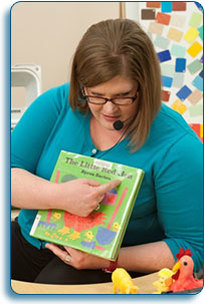
~FM system: The speaker wears a microphone around their neck that is attached to a receiver that projects their voice. The microphone can either be sent to a small speaker in the back of the room, or right to a device in a students ear. ~Room acoustics: There is less chance for echo in a smaller classroom. Students with hearing loss have difficulty hearing sounds when there is a large echo. |
|
|
|
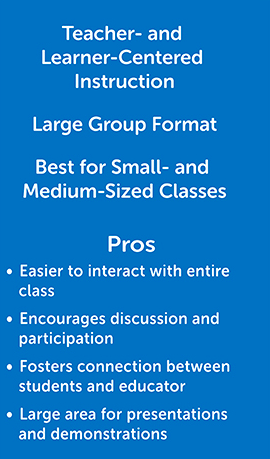
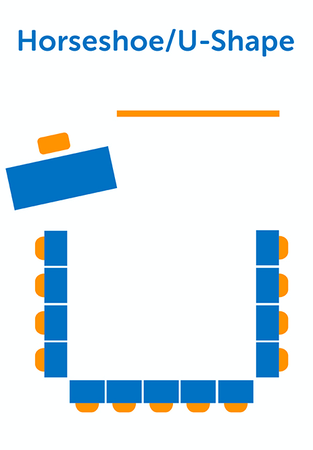
~ Visual Access: Desks can be arranged in a U shape to allow all students to see each other. This permits students with hearing loss to read lips if necessary. Teachers should also remember to face the students when they are giving instruction.
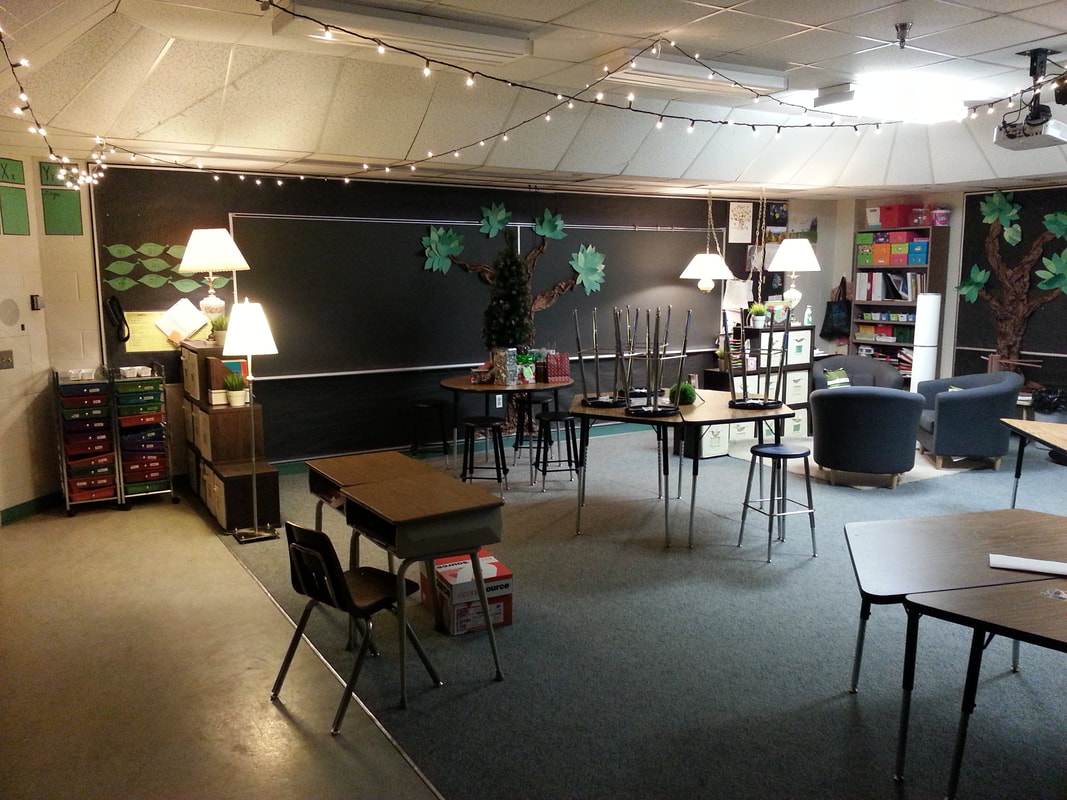
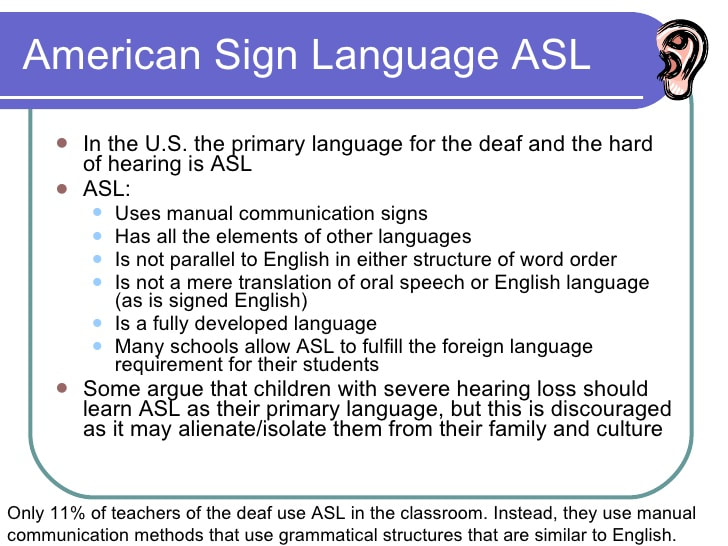
~Quieting the environment: Unwanted noise should be tuned out. Turn off noisy radiators and screens, close doors and windows, and use lamps instead of overhead lights. Rugs also absorb noise to make the classroom quieter. ~Teaching other students sign language: If there is a student in the classroom using sign language, teaching others the language as well can help students with hearing loss feel more included. |
|
|


|
Tech Tools for Students
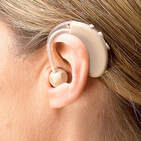
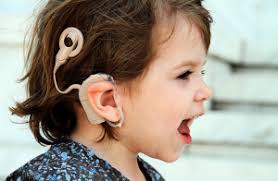
Hearing Aids: This device amplifies existing sounds around the wearer and makes sounds easier to understand. They can also provide sound filtering to make existing sounds easier to hear. Cochlear Implants: These are recommended for people with significant hearing loss. The microphone on the outside detects the sound, a speech processor filters and processes the sounds, and a transmitter transmits the signal to the internal receiver. Internally, there is a receiver that collects the processed sound and converts them into electrical signals to the cochlea. Smartphone Applications: -Hamilton Mobile CapTel: This app allows students to talk into the device and it types out word for word what is being said. This is mainly used in phone conversations, but could be used for instruction in the classroom. - TapTap: This app alerts the user when a loud noise has been made nearby. The phone vibrates or flashes to make the user aware of their surroundings. - Dragon Dictation: Students or teachers can talk into this application and it will write out what has been said. This can help with instruction in the classroom. |
Parental Support
The American Society for Deaf Children website provides parents with articles, support groups, and conferences about deaf and hard of hearing children. It also provides the opportunity to learn sign language and talk to experts and other parents about their experiences.
http://deafchildren.org/knowledge-center/parents-and-families/
The Supporting Children with Hearing Loss website provides parents with information on students with hearing loss as well as information to support their child in school. It also provides teachers with resources to use in the classroom and how to support students with hearing loss so they can access curriculum.
http://successforkidswithhearingloss.com/teacher-tools-2/
The Hearing Loss Association of America is a great site for parents to gain more information about hearing impairments. The site has a discussion section for parents and families to get in touch with one another to discuss different thoughts and ideas.
http://www.hearingloss.org/content/parents-children-hearing-loss
The American Society for Deaf Children website provides parents with articles, support groups, and conferences about deaf and hard of hearing children. It also provides the opportunity to learn sign language and talk to experts and other parents about their experiences.
http://deafchildren.org/knowledge-center/parents-and-families/
The Supporting Children with Hearing Loss website provides parents with information on students with hearing loss as well as information to support their child in school. It also provides teachers with resources to use in the classroom and how to support students with hearing loss so they can access curriculum.
http://successforkidswithhearingloss.com/teacher-tools-2/
The Hearing Loss Association of America is a great site for parents to gain more information about hearing impairments. The site has a discussion section for parents and families to get in touch with one another to discuss different thoughts and ideas.
http://www.hearingloss.org/content/parents-children-hearing-loss
Sources:
http://www.asha.org/public/hearing/Effects-of-Hearing-Loss-on-Development/
http://www.specialeducationguide.com/disability-profiles/hearing-impairments/
https://www.scribd.com/doc/60741288/hearinglossfactsheet?secret_password=mzwfl8f9pksc0jbbewh#fullscreen&from_embed
http://www.asha.org/public/hearing/Prevalence-and-Incidence-of-Hearing-Loss-in-Children/
https://www2.ed.gov/about/offices/list/ocr/docs/hq9806.html
https://www.uvm.edu/~cdci/universaldesign/?Page=teaching-accommodations/deaf.php&SM=teaching-accommodations/submenu.html
http://successforkidswithhearingloss.com/relationship-hl-listen-learn/accommodations/
http://www.accreditedschoolsonline.org/resources/students-with-hearing-impairments/
http://www.asha.org/public/hearing/Effects-of-Hearing-Loss-on-Development/
http://www.specialeducationguide.com/disability-profiles/hearing-impairments/
https://www.scribd.com/doc/60741288/hearinglossfactsheet?secret_password=mzwfl8f9pksc0jbbewh#fullscreen&from_embed
http://www.asha.org/public/hearing/Prevalence-and-Incidence-of-Hearing-Loss-in-Children/
https://www2.ed.gov/about/offices/list/ocr/docs/hq9806.html
https://www.uvm.edu/~cdci/universaldesign/?Page=teaching-accommodations/deaf.php&SM=teaching-accommodations/submenu.html
http://successforkidswithhearingloss.com/relationship-hl-listen-learn/accommodations/
http://www.accreditedschoolsonline.org/resources/students-with-hearing-impairments/