Impact of Special Needs
  • BLOG 2017
  • IMPACT
    • History of Special Education Christina Pressley
    • INQUIRY >
      • RESEARCH AVENUES >
        • Marshall Memo
    • SYLLABUS >
      • Norms
      • Council for Exceptional Children
      • Flight Practice
      • Ladder of Feedback
      • Marshmallow Challenge
      • MeMoves!
      • National Teaching Norms
      • Scavenger Hunt
      • Unthinkables
  • FOUNDATIONS
    • Common Core >
      • Mathematics >
        • Math Graphic Organizers
        • Math: Subitizing and Ten Frames
        • Math Inclusion Resources and Strategies
      • Literacy >
        • Alphabet Awareness
        • Classroom Labels
        • Close Reading Strategies
        • The Daily Five
        • Dialogic and Guided Reading
        • Phonics Instruction
        • Phonological Awareness
        • Story Grammar Markers
        • Writing
      • TECHNOLOGY RESOURCES FOR LEARNING >
        • ACCESSIBLE INSTRUCTIONAL MATERIALS
        • Assistive Technology >
          • Assistive Technology Andrew
        • The Flipped Classroom in SPED
        • Science >
          • STEM
        • WEBSITES FOR LEARNING >
          • Web 2.0
          • cool tools
    • IEP >
      • Assessment
      • Terminology
      • Accommodations >
        • Assistive Technology >
          • Technology
          • AIM
        • MCAS Accommodations
      • Documents
      • Goals and Objectives
      • Transition Services >
        • Early Childhood Transition
      • Early Intervention
      • 504 Plans
    • INCLUSION >
      • Child Study Teams >
        • CST Report (Action Plans)
      • DCAP
      • RTI >
        • RTI in SLD Determination Lauren A
        • MA Tiered System of Supports
      • Observations
      • PALS: PEER ASSISTED LEARNING STRATEGIES
      • Para Educator
    • DISABILITY AWARENESS >
      • IRIS Resources STAR Legacy Modules
    • EDUCATIONAL STANDARDS >
      • 21st Century Skills
      • Common Core
      • IDEA >
        • Dear Colleague
        • ADA Americans with Disability Act
      • Special Education History >
        • Timelines in Special Education
    • FAMILY >
      • DIVERSITY
      • ADA and ADULTHOOD
      • Stigma in Special Needs in Latino Family Emily Burdick
  • TOPICS
    • Transgender Youth
  • LEARNING THEORIES
    • LEARNING THEORIES A-G >
      • ABA Jenna
      • All Kinds of Minds
      • Bloom's Taxonomy
      • Behaviorism
      • Bronfenbrenner’s Theory
      • Child Development
      • Cognitivism
      • Constructivism
      • GRIT
      • Growth Mindset
    • LEARNING THEORIES H-Z >
      • Kinesthetic Learning Eilish Reynolds
      • Learning Styles
      • Meaning Making
      • Motivation
      • Neuroscience
      • Building Relationships Katherine Bonilla
      • Social Learning Theory
      • Teaching for Understanding
      • Thinking Maps
      • UDL >
        • Assistive Technolog Jacqueline
        • UDL and the Common Core
        • UDL-Jenny/Lauren
      • Visible Thinking
  • DISABILITIES
    • AUTISM (ASD) >
      • Autism >
        • Autism Family Info Lindsey Blackman
        • Pink on the Spectrum Sara Cane
        • Autism Troy Sargent >
          • Autism and ABA Haley Award
          • Autism Janine Steinhauser
          • Autism James McDonough
        • Autism Rebecca Siegel
        • Autism and Language
        • Autism Kat
        • Autism and Adulthood
        • Autism in an Inclusive Classroom Kathryn N
        • Autism Dana Moody
        • Autism Non-Verbal Justin
      • ASD Resources
      • Autism-Nicky >
        • ABA in Autism Intervention Lauren C
      • Asperger's Syndrome Leeanne
    • COMMUNICATION >
      • Apraxia Victoria >
        • Apraxia Gabrielle D'Avolio
      • Communication Resources >
        • Expressive Language-Chelsey
      • Select Mutism
    • DEVELOPMENTAL DELAY >
      • Fine and Gross Motor Devel.-Denise >
        • Motor Articles
    • EMOTIONAL (BEHAVIOR) >
      • Bipolar Disorder Cailey >
        • Bipolar Disorder Caitlin Worthen
      • Behavior Resources
      • Mental Health Needs in College Peter Rakes
      • Relational Aggression Meghan Lederhos
      • Emotional Apps Katherine Bonilla
      • Trauma Supportive Practice Samantha Sinotte
    • HEALTH >
      • Cancer
      • ADHD and ADD >
        • ADHD Isabella Delmoral
        • ADHD Julia
        • ADHD Olivia Pizzi
        • ADD/ADHD >
          • ADHD Jenny/Lauren
          • ADHD Sarah Morgenthaler
      • Health Resources
    • INTELLECTUAL >
      • Acquired Brain Injury >
        • Intellectual Resources
      • Down Syndrome
      • Down Syndrome Jennifer Whitman
      • Prader-Willi Syndrome Samantha Curtis
    • NEUROLOGICAL >
      • Brain Development-Kate
      • Memory-Sarita
      • EXECUTIVE FUNTIONING >
        • Executive Functioning Disorder Laura Brady
      • Rett Syndrom Brycelyn
      • SENSORY PROCESSING DYSREGULATION >
        • SI Resources >
          • Sensory Integration-Steph >
            • SI Reference Articles
      • Fetal Alcohol Syndrome-Mary >
        • Fetal Alcohol Syndrome Elizabeth Watts
    • PHYSICAL >
      • Hearing Disability Rachel Jones
      • Physical Resources
      • Student Integration After Hospitalization Kathryn R
    • SENSORY >
      • HEARING >
        • Hearing Loss Yan Li Xu
        • Hearing Impairment Brianne Syring
        • Hearing Resources
        • Deaf and Hard of Hearing Brianna Normile
      • Sensory Processing Disorder Mikaela Newell
      • VISION >
        • Vision Resources
    • SPECIFIC LEARNING >
      • SLD Elizabeth Mossop
      • NVLD Nicole Snyder
      • LD Resources >
        • Dyscalculia Lily Chase-Lubitz
        • Dysgraphia Erin Bruce
        • Reading >
          • Dyslexia-Anthony >
            • Dyslexia Lily Montagna
            • Dyslexia Victoria Small
            • Dyslexia 2 Tiffany
            • Dyslexia Meghan
            • Dyslexia Colleen Talbot
          • Early Literacy Resources
          • LD and IDEA Issue
          • Reading by the Rules
        • Content
        • Math
        • Writing
        • Technology >
          • Reading Comprehension Strategies Meredith Chen
        • Teaching
    • TWICE EXCEPTIONAL >
      • Twice Exceptional Articles
      • Twice Exceptional Students Kelcy West
      • Twice Exceptional-Melissa
  • BEHAVIOR
    • CLASSROOM MANAGEMENT >
      • A-J >
        • 21st Century Learning
        • Behavior Modification >
          • Behavior Management Jon Weinberger
        • Bloom's Taxonomy
        • Circle of Friends
        • Collaborative Problem Solving
        • Culturally Responsive Pedagogy
        • The Daily Five
        • Differentiated Instruction
      • K-Z >
        • Kids and War
        • MeMoves!
        • Responsive Classroom
        • Socia Skills Curriculums Jessica Fox
        • Social & Emotional Learning Carol Yourman
        • Social Thinking
        • Strategies for Aggression-Jim
        • Universal Design for Learning
    • PREVENTING BULLYING >
      • Good Play Project
  • PROJECTS 2018
    • INQUIRY >
      • A-K
      • L-Z

How to Support Your Student with Hearing Loss or Impairment

2-3 children per 1000 are born with hearing loss each year. Illness, injuries, certain type of medicine, and loud noise level can contribute to hearing loss. Genetic factors contribute to 50% of hearing loss in babies.
Understanding Hearing Disability:
Q: What is hearing disability? Is the world of a child with hearing disability silent? 

A: 
According to Massachusetts Dept of Education: 
Hearing - The capacity to hear, with amplification, is limited, impaired, or absent and results in one or more of the following: reduced performance in hearing acuity tasks; difficulty with oral communication; and/or difficulty in understanding auditorally-presented information in the education environment. The term includes students who are deaf and students who are hard-of -hearing.


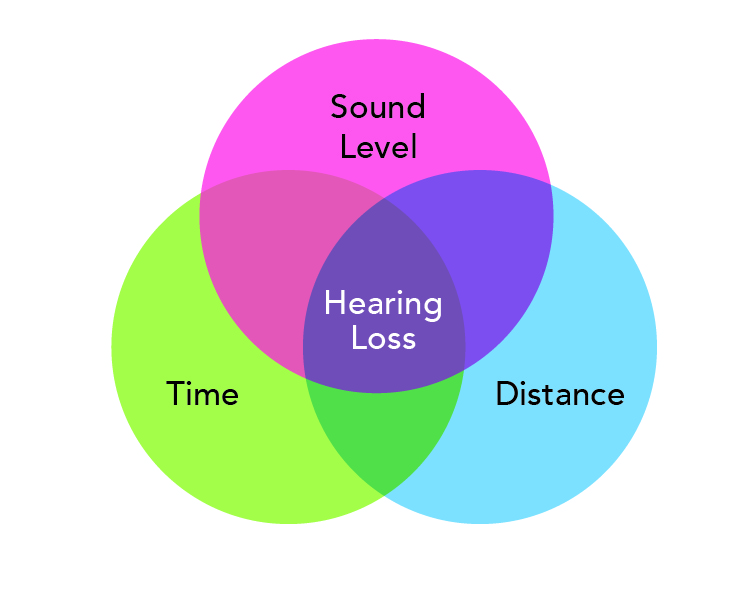
​The extent of damage to your hearing caused by noise depends on:
  1. Decibel level: How loud the sound is.
  2. Distance: How close you are to the source of the sound.
  3. Time: The length of time you are exposed to the sound.​
Picture
IEP/ 504 Plan
Q: Which students with hearing disability need IEP and which students need 504 Plan?

​A: IEP is for students who require specialized instruction like learning sign language and the 504 plan is for students who only require accommodations like hearing aid and amplification system.

Q: What considerations do teachers need to make in IEP for a child who is deaf?
 
​A:
  1. Communication needs and the child's and family's preferred mode of communication;
  2. Linguistic needs;
  3. Severity of hearing loss and potential for using residual hearing;
  4. Academic level; and
  5. Social, emotional, and cultural needs including opportunities for peer interactions and communication.
School Environment
Classroom Set Up
Q:What do teachers need to consider when setting up classroom?
​A:
1) sound echo in the classroom 
2) arrange desk in U shape so everyone can see each other
3) tune out unwanted noise (windows, doors)
​4) visual cues in the environment

Picture
Social and Emotional Support 
Q: How to create a safe school environment for children with hearing disability?
A:
1) Promote deaf awareness and positive attitudes to deafness
2) Have safe and quiet zones
3) Make sure students know what is bullying
4) Make sure there is system for reporting and monitoring bullying behaviors.

​How to help your student with hearing disability socially and emotionally?
1)Teaching social skills and developing peer relationship.
2) Help develop student's language skills.
​3) Provide opportunities to develop confidence and self-esteem.
​4) Help develop student's understanding of social norms and bullying.
​
Picture
Guidelines for Curriculum:
  • ensuring teaching strategies engage deaf pupils in learning, enabling them to develop key skills in communication, reading, writing and mathematics
  • making sure deaf pupils make sustained progress, and attainment gaps compared with other pupils are narrowed
  • ensuring the curriculum provides positive experiences for deaf pupils, offering well organised, imaginative and effective opportunities for learning and a broad range of experiences that contribute to their achievement and development.
Picture
Picture
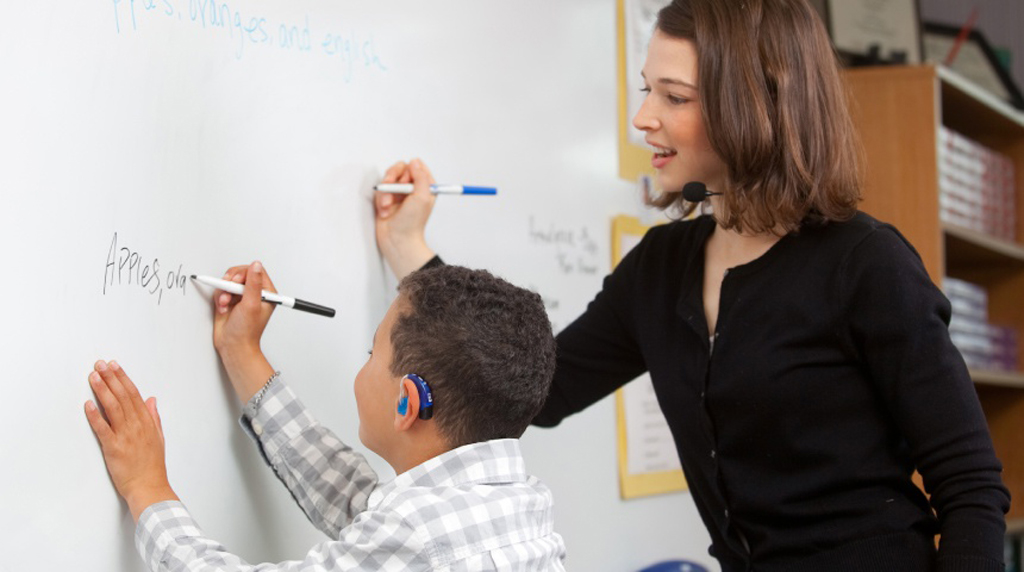
Strategies for Teacher When Lecturing:
  • Teacher avoids standing in front of a window so that his/her face can be seen without glare from the sun or outside distractions.
  • All new directions, concepts and information should be presented from the front of the room, not when the teacher is moving between desks or during noisy classroom transition times.
  • Adhere to a classroom routine; if a student misses something they will be better able to predict what they should be doing or what will happen next.
  • During classroom discussions ask students to speak one at a time.
  • Summarize key points made by students’ answers or comments during class discussion.
  • Write all assignments on the board, including textbook page numbers the class will be turning to in each lesson period.
  • If a visual is used, like a map, graph or a projected image, allow students a chance to look at the visual, describe what they are seeing, and provide short silences so they can process the meaning of both the visual and what is being said.
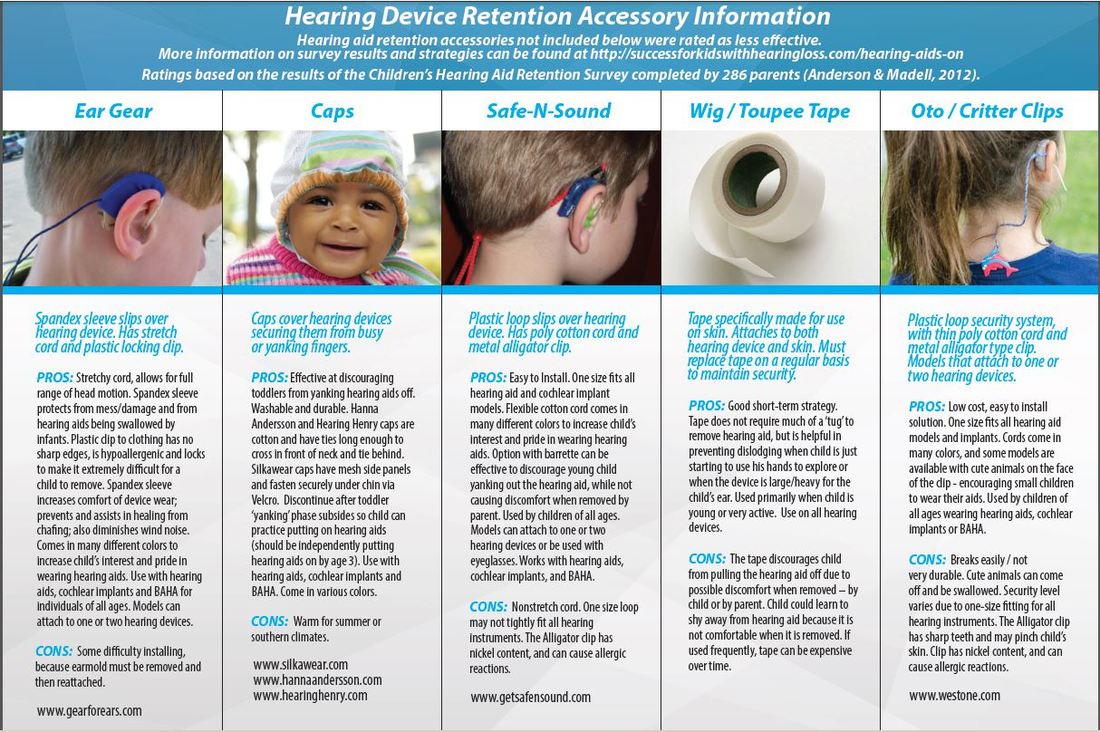
  • Make sure the child’s hearing aids or cochlear implants are functioning each day. A school staff member should be responsible for checking the devices daily and/or for working with the student as they gain responsibility for performing daily checks of their own devices.
  • The student and teacher can work out a signal that can be used when the student is having a hard time understanding. For example, cupping a hand behind one ear, putting a finger on the side of the nose or hanging a hand over the front of the desk and wiggling the fingers could all be confidential signals between the student and the teacher. With this reminder, the teacher can control the noise, distance or summarize what has recently been presented. 
  • All videos need to be captioned for the student to access the same information as other students.
  • Voice-to-text adaptations can be explored for students who are unable to access verbal instruction auditorilly (or via sign language or cued speech) at a rate similar to students without hearing loss.
Picture
Accommodations to Consider to Address the Access and Learning Needs of Students with Hearing Loss: 
Amplification Options:
___Personal hearing device (hearing aid, cochlear implant, tactile device)
___Personal FM system (hearing aid + FM)
___FM system/auditory trainer (without personal hearing aid)
___Walkman-style FM system
___Sound-field FM system
Assistive Devices:
___TDD
___TV captioned
Curricular Modifications:
___Modify reading assignments (shorten length, adapt or eliminate phonics assignments)
___Modify written assignments (shorten length, adjust evaluation criteria)
___Pre-tutor vocabulary
___Provide supplemental materials to reinforce concepts
___Provide extra practice
___Alternative curriculum
Evaluation Modifications:
___Reduce quantity of tests or test items
___Use alternative tests
___Provide reading assistance with tests
___Allow extra time
Other Considerations:
___Supplemental instruction (speech, language, pragmatic skills, auditory, speech reading
skills)
___Counseling
___Sign language instruction
___Transition / Vocational services
___Family support
___Deaf/Hard of Hearing role models
___Recreational/Social opportunities
___Financial assistance
___Monitor progress periodically by a specialist in Deaf/Hard of Hearing
How Your Student Might Feel at School:
Massachusetts Resources For Deaf or Hard of Hearing Students 
​
  • Massachusetts Transition Resources for Young Adults Who are Deaf or Hard of Hearing
    A brochure developed by the pepnet 2 State Team.
  • The Massachusetts Commission for the Deaf and Hard of Hearing (MCDHH)
    MCDHH is a commission, under the Executive Office of Human Services, which serves as the principal agency in the state on behalf o deaf, late deafened and hard of hearing people.
  • Massachusetts Association of Approved Private Schools (MAAPS)
    This school directory lists the name and address of schools, contact information and includes rates and types of disability and needs served.
  • Massachusetts Organization of Educational Collaboratives (MOEC)
    This is the Commonwealth's primary advocate for and facilitator of in-district collaboration in education and related services.
  • The Deaf and Hard of Hearing Program
    The Deaf and Hard of Hearing Program at Children's Hospital Boston provides comprehensive evaluation and consultative services to deaf and hard of hearing children, their physicians, families, schools, and other agencies.
Directory for National Organizations

Proudly powered by Weebly