Apraxia of Speech
Description of DisabilityApraxia of speech is a speech disorder. The disorder makes it difficult or impossible for someone to move his/her mouth and/or tongue to speak correctly and consistently, even though the speech muscles are not weak or paralyzed. Those with Apraxia have difficulty saying sounds, syllables, and words. Apraxia of speech can range from mild to severe. Apraxia is considered a rare disease that affects about 200,000 people in the U.S. and is continuing to rise.
|

There are two forms of Apraxia of Speech:
|
Characteristics
There are many signs and symptoms of Apraxia of Speech, all may apply to some and very few may apply to others. Some may include difficulty stringing syllables together in the right order to create words, minimal babbling during infancy, difficulty saying long or complex woods, repeated attempts at pronouncing words, etc. In order to diagnose this disorder, a speech language pathologist looks for the presence of some or many signs and symptoms.
Apraxia is related to other heath related issues such as delayed language development, other expressive language problems, difficulties with fine motor movements or coordination, or problems related to learning to read, write, or spell. Apraxia is often confused with or associated with another communication disorder called Aphasia. These disabilities are similar but can also occur simultaneously. They can both occur as a result of a stroke or other types of brain damage. Aphasia involves the inability to say and comprehend words.
In some cases, the symptoms of Apraxia randomly disappear and the person's abilities are recovered normally on their own. This is called spontaneous recovery. In most cases, Apraxia is treated with speech-language therapy and therapists use a wide array of strategies that are individualized to each patient. One-on-one therapy is usually most helpful. In the meantime during treatment, family and friend support is encouraged and other resources, such as sign language, word and picture books, or various forms of assistive technologies may be used.
Apraxia is related to other heath related issues such as delayed language development, other expressive language problems, difficulties with fine motor movements or coordination, or problems related to learning to read, write, or spell. Apraxia is often confused with or associated with another communication disorder called Aphasia. These disabilities are similar but can also occur simultaneously. They can both occur as a result of a stroke or other types of brain damage. Aphasia involves the inability to say and comprehend words.
In some cases, the symptoms of Apraxia randomly disappear and the person's abilities are recovered normally on their own. This is called spontaneous recovery. In most cases, Apraxia is treated with speech-language therapy and therapists use a wide array of strategies that are individualized to each patient. One-on-one therapy is usually most helpful. In the meantime during treatment, family and friend support is encouraged and other resources, such as sign language, word and picture books, or various forms of assistive technologies may be used.
Impact on Learning
Apraxia of Speech can have a very detrimental effect on a student's learning. Since the child has difficulty with speaking, the child's reading, writing, communication, and social skills will inadvertently be effected. The chid's visual and auditory skills may not be effected. The child's school can help support their learning and increase their strengths by providing them with the least restrictive environment and providing them with the necessary special education services.
|
|

The above pictures will lead you to various supportive websites of resources. These include a blog written by a mother of her thoughts and resources on early speech and language development. The mother includes many links and worksheets from her practice of being a speech language pathologist and also welcomes friends to take over some specific topic areas on her blog. One whole page on her blog is dedicated to Apraxia and includes basic information about the disorder along with personal experience, tips, and other resources. Another link above leads you to the Speech-EZ Apraxia program which is a program dedicated to improve speech development for children with Apraxia. The program uses a multi sensory experience in their program involving visual, auditory, proprioceptive, gestural, and tactile inputs. Finally, there is an example above of basic level word and picture cards that help children with speech development disorders learn to form words.
|
|
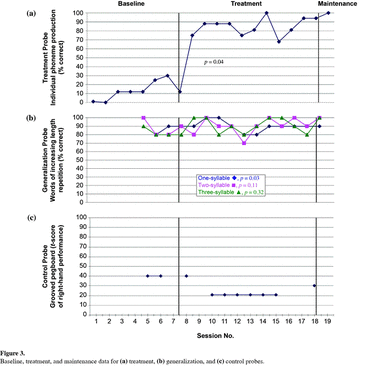
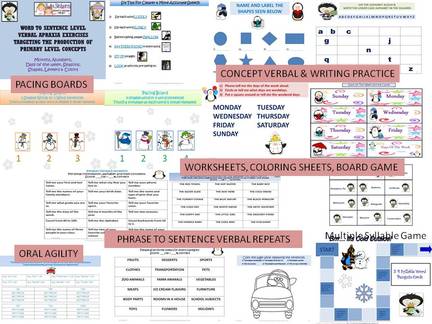
The above graph shows you the improvement of children in a study using techniques for treating Apraxia. The worksheet on the right shows a bunch of different techniques, charts, and practiced children with Apraxia can do with a speech language pathologist.
|
|
|
|
Apraxia Strategies
-Teach Me to Talk! is a website full of successful Speech Therapy strategies for working with toddlers with Apraxia and other Speech-Language difficulties. The author stresses the importance of trying some of these strategies at home between the parent and child but also some may be designed specifically between a SLP and the child.
-I found a letter written by a parent of a child with Apraxia to a the child's future teacher. This letter can serve as a strategy for introducing a parent's special child with Apraxia to a new teacher and explaining how instruction for this child may be different and potentially more difficult compared to the teacher's other students. This letter may also serve as a way to set the child up with special education services in school with a SLP.
-I found a letter written by a parent of a child with Apraxia to a the child's future teacher. This letter can serve as a strategy for introducing a parent's special child with Apraxia to a new teacher and explaining how instruction for this child may be different and potentially more difficult compared to the teacher's other students. This letter may also serve as a way to set the child up with special education services in school with a SLP.
Apraxia Resources
-Researchers are searching for the cause of Developmental Apraxia. Childhood Apraxia of Speech Association of North America (CASANA) conducts research on effective treatments of CAS. CASANA was founded in 2000 and is based in Pittsburgh, PA. It is the only non-profit association completely dedicated to research on children with Apraxia and their families.
-There is also a Walk For Children with Apraxia of Speech to support CASANA's research funds.
-This is a helpful resource to help parents of children with Apraxia to understand the hardships families go through when beginning therapy for their child and throughout the course of treatment. This resource is called "Why Do Children Refuse or Resist Speech Therapy?"
-There is also a Walk For Children with Apraxia of Speech to support CASANA's research funds.
-This is a helpful resource to help parents of children with Apraxia to understand the hardships families go through when beginning therapy for their child and throughout the course of treatment. This resource is called "Why Do Children Refuse or Resist Speech Therapy?"
Research Articles
-Script Training Treatment for Adults with Apraxia of Speech is an article describing the success of script training treatment for those with Apraxia after it was shown to successfully treat those with the similar condition Aphasia as well.
-Interventions for Apraxia of Speech Following Stroke is an article on the research of treatments and interventions used for people who acquired Apraxia of Speech after a stroke. This article focuses on Acquired Apraxia rather than Developmental Apraxia.
-F18 Emission Tomography in Progressive Apraxia of Speech examines the difference effected brain regions between Apraxia and Aphasia.
-The below article discusses the Treatment guidelines for Acquired Apraxia of Speech. This article follows another review of Apraxia treatment evidence.
-Interventions for Apraxia of Speech Following Stroke is an article on the research of treatments and interventions used for people who acquired Apraxia of Speech after a stroke. This article focuses on Acquired Apraxia rather than Developmental Apraxia.
-F18 Emission Tomography in Progressive Apraxia of Speech examines the difference effected brain regions between Apraxia and Aphasia.
-The below article discusses the Treatment guidelines for Acquired Apraxia of Speech. This article follows another review of Apraxia treatment evidence.