Impact of Special Needs
  • BLOG 2017
  • IMPACT
    • History of Special Education Christina Pressley
    • INQUIRY >
      • RESEARCH AVENUES >
        • Marshall Memo
    • SYLLABUS >
      • Norms
      • Council for Exceptional Children
      • Flight Practice
      • Ladder of Feedback
      • Marshmallow Challenge
      • MeMoves!
      • National Teaching Norms
      • Scavenger Hunt
      • Unthinkables
  • FOUNDATIONS
    • Common Core >
      • Mathematics >
        • Math Graphic Organizers
        • Math: Subitizing and Ten Frames
        • Math Inclusion Resources and Strategies
      • Literacy >
        • Alphabet Awareness
        • Classroom Labels
        • Close Reading Strategies
        • The Daily Five
        • Dialogic and Guided Reading
        • Phonics Instruction
        • Phonological Awareness
        • Story Grammar Markers
        • Writing
      • TECHNOLOGY RESOURCES FOR LEARNING >
        • ACCESSIBLE INSTRUCTIONAL MATERIALS
        • Assistive Technology >
          • Assistive Technology Andrew
        • The Flipped Classroom in SPED
        • Science >
          • STEM
        • WEBSITES FOR LEARNING >
          • Web 2.0
          • cool tools
    • IEP >
      • Assessment
      • Terminology
      • Accommodations >
        • Assistive Technology >
          • Technology
          • AIM
        • MCAS Accommodations
      • Documents
      • Goals and Objectives
      • Transition Services >
        • Early Childhood Transition
      • Early Intervention
      • 504 Plans
    • INCLUSION >
      • Child Study Teams >
        • CST Report (Action Plans)
      • DCAP
      • RTI >
        • RTI in SLD Determination Lauren A
        • MA Tiered System of Supports
      • Observations
      • PALS: PEER ASSISTED LEARNING STRATEGIES
      • Para Educator
    • DISABILITY AWARENESS >
      • IRIS Resources STAR Legacy Modules
    • EDUCATIONAL STANDARDS >
      • 21st Century Skills
      • Common Core
      • IDEA >
        • Dear Colleague
        • ADA Americans with Disability Act
      • Special Education History >
        • Timelines in Special Education
    • FAMILY >
      • DIVERSITY
      • ADA and ADULTHOOD
      • Stigma in Special Needs in Latino Family Emily Burdick
  • TOPICS
    • Transgender Youth
  • LEARNING THEORIES
    • LEARNING THEORIES A-G >
      • ABA Jenna
      • All Kinds of Minds
      • Bloom's Taxonomy
      • Behaviorism
      • Bronfenbrenner’s Theory
      • Child Development
      • Cognitivism
      • Constructivism
      • GRIT
      • Growth Mindset
    • LEARNING THEORIES H-Z >
      • Kinesthetic Learning Eilish Reynolds
      • Learning Styles
      • Meaning Making
      • Motivation
      • Neuroscience
      • Building Relationships Katherine Bonilla
      • Social Learning Theory
      • Teaching for Understanding
      • Thinking Maps
      • UDL >
        • Assistive Technolog Jacqueline
        • UDL and the Common Core
        • UDL-Jenny/Lauren
      • Visible Thinking
  • DISABILITIES
    • AUTISM (ASD) >
      • Autism >
        • Autism Family Info Lindsey Blackman
        • Pink on the Spectrum Sara Cane
        • Autism Troy Sargent >
          • Autism and ABA Haley Award
          • Autism Janine Steinhauser
          • Autism James McDonough
        • Autism Rebecca Siegel
        • Autism and Language
        • Autism Kat
        • Autism and Adulthood
        • Autism in an Inclusive Classroom Kathryn N
        • Autism Dana Moody
        • Autism Non-Verbal Justin
      • ASD Resources
      • Autism-Nicky >
        • ABA in Autism Intervention Lauren C
      • Asperger's Syndrome Leeanne
    • COMMUNICATION >
      • Apraxia Victoria >
        • Apraxia Gabrielle D'Avolio
      • Communication Resources >
        • Expressive Language-Chelsey
      • Select Mutism
    • DEVELOPMENTAL DELAY >
      • Fine and Gross Motor Devel.-Denise >
        • Motor Articles
    • EMOTIONAL (BEHAVIOR) >
      • Bipolar Disorder Cailey >
        • Bipolar Disorder Caitlin Worthen
      • Behavior Resources
      • Mental Health Needs in College Peter Rakes
      • Relational Aggression Meghan Lederhos
      • Emotional Apps Katherine Bonilla
      • Trauma Supportive Practice Samantha Sinotte
    • HEALTH >
      • Cancer
      • ADHD and ADD >
        • ADHD Isabella Delmoral
        • ADHD Julia
        • ADHD Olivia Pizzi
        • ADD/ADHD >
          • ADHD Jenny/Lauren
          • ADHD Sarah Morgenthaler
      • Health Resources
    • INTELLECTUAL >
      • Acquired Brain Injury >
        • Intellectual Resources
      • Down Syndrome
      • Down Syndrome Jennifer Whitman
      • Prader-Willi Syndrome Samantha Curtis
    • NEUROLOGICAL >
      • Brain Development-Kate
      • Memory-Sarita
      • EXECUTIVE FUNTIONING >
        • Executive Functioning Disorder Laura Brady
      • Rett Syndrom Brycelyn
      • SENSORY PROCESSING DYSREGULATION >
        • SI Resources >
          • Sensory Integration-Steph >
            • SI Reference Articles
      • Fetal Alcohol Syndrome-Mary >
        • Fetal Alcohol Syndrome Elizabeth Watts
    • PHYSICAL >
      • Hearing Disability Rachel Jones
      • Physical Resources
      • Student Integration After Hospitalization Kathryn R
    • SENSORY >
      • HEARING >
        • Hearing Loss Yan Li Xu
        • Hearing Impairment Brianne Syring
        • Hearing Resources
        • Deaf and Hard of Hearing Brianna Normile
      • Sensory Processing Disorder Mikaela Newell
      • VISION >
        • Vision Resources
    • SPECIFIC LEARNING >
      • SLD Elizabeth Mossop
      • NVLD Nicole Snyder
      • LD Resources >
        • Dyscalculia Lily Chase-Lubitz
        • Dysgraphia Erin Bruce
        • Reading >
          • Dyslexia-Anthony >
            • Dyslexia Lily Montagna
            • Dyslexia Victoria Small
            • Dyslexia 2 Tiffany
            • Dyslexia Meghan
            • Dyslexia Colleen Talbot
          • Early Literacy Resources
          • LD and IDEA Issue
          • Reading by the Rules
        • Content
        • Math
        • Writing
        • Technology >
          • Reading Comprehension Strategies Meredith Chen
        • Teaching
    • TWICE EXCEPTIONAL >
      • Twice Exceptional Articles
      • Twice Exceptional Students Kelcy West
      • Twice Exceptional-Melissa
  • BEHAVIOR
    • CLASSROOM MANAGEMENT >
      • A-J >
        • 21st Century Learning
        • Behavior Modification >
          • Behavior Management Jon Weinberger
        • Bloom's Taxonomy
        • Circle of Friends
        • Collaborative Problem Solving
        • Culturally Responsive Pedagogy
        • The Daily Five
        • Differentiated Instruction
      • K-Z >
        • Kids and War
        • MeMoves!
        • Responsive Classroom
        • Socia Skills Curriculums Jessica Fox
        • Social & Emotional Learning Carol Yourman
        • Social Thinking
        • Strategies for Aggression-Jim
        • Universal Design for Learning
    • PREVENTING BULLYING >
      • Good Play Project
  • PROJECTS 2018
    • INQUIRY >
      • A-K
      • L-Z

ADHD and Kinesthetic Learning

I hear and I forget. I see and I remember. I do and I understand. -Chinese Proverb. 

ADHD
There are three types of ADHD and each have different characteristics.

Type 1: ADHD Predominantly Hyperactive-Impulsive-  is diagnosed when a child demonstrates hyperactivity, impulsive behavior, excessive restlessness, being overactive and easily aroused.

Type 2: ADHD Predominantly Inattentive- .Is diagnosed when a child demonstrates that they are easily distracted, forgetful, unable to keep attention on tasks or activities, ignores speaker even when spoken to directly, does not follow instructions, has difficulty finishing schoolwork or chores, is easily sidetracked, is disorganized, avoids tasks that require long periods of mental effort, and loses important things needed for tasks and activities.
​

Type 3: ADHD Combined- is diagnosed when a child demonstrates behaviors from the two other types of ADHD, both Inattentive ADHD and Hyperactive-Impulsive ADHD.
Kinesthetic Learning
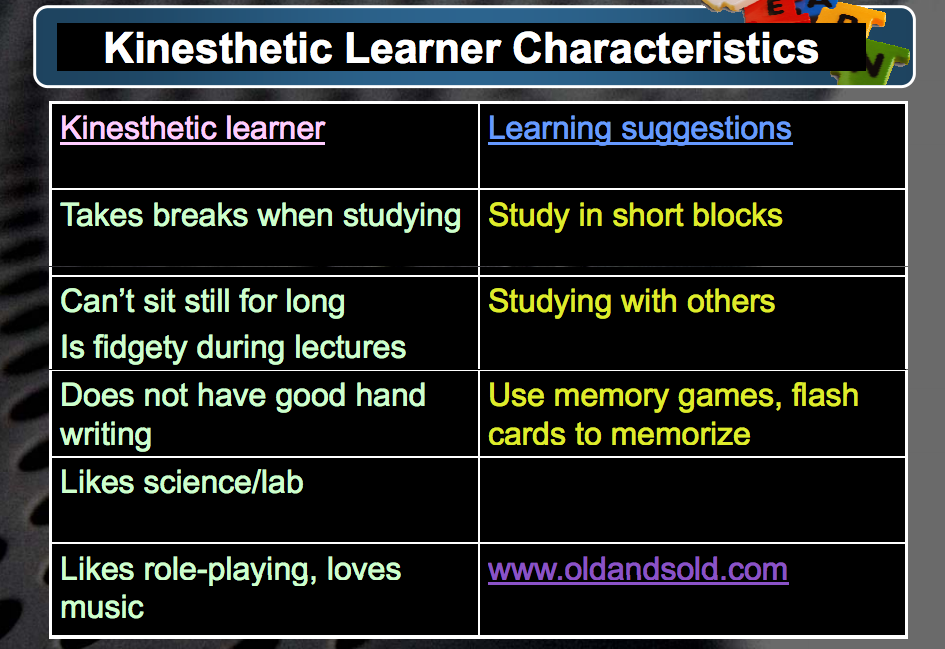
  • The Kinesthetic Learner will understand concepts and ideas best when their bodies are incorporated in the learning process.
  • Kinesthetic Learning:
    • "Occurs when students are engage in a physical activity. It is learning by doing, exploring, and discovering" -Neil Fleming
    • Incorporates gross motor body movement into the learning process.
    • Can be used for all subjects and at all ages.
    • includes learning activities that are action oriented such as experiments, role playing, field trips, sport games, dancing, ect.
    • "Makes learning implicit, the brains preferred way to learn."  Michael Kuczala
    • Produces a motivated learner who is engaged and eager to learn. 
Picture
Credit: M. Elia Flores M.Ed.,R.T. (R) http://www.blinn.edu/twe/radi/Teaching%20%20Learning%20Styles.pdf

Studies have shown that kinesthetic learners are sometimes diagnosed with ADHD because they were moving in and out of their seat a lot, they were unable to learn traditionally, and they would lose interest quickly. Please refer to the button below for a link to a comprehensive break down of the difference between children with ADHD and kinesthetic learners.

ADHD or Kinesthetic Learner?
According to the Teaching Alliance of America about 29% of learners in the United States are visual learners, 34% are auditory learners and 37% of learners are kinesthetic learners. 
Kinesthetic learning in the classroom to support to students with ADHD

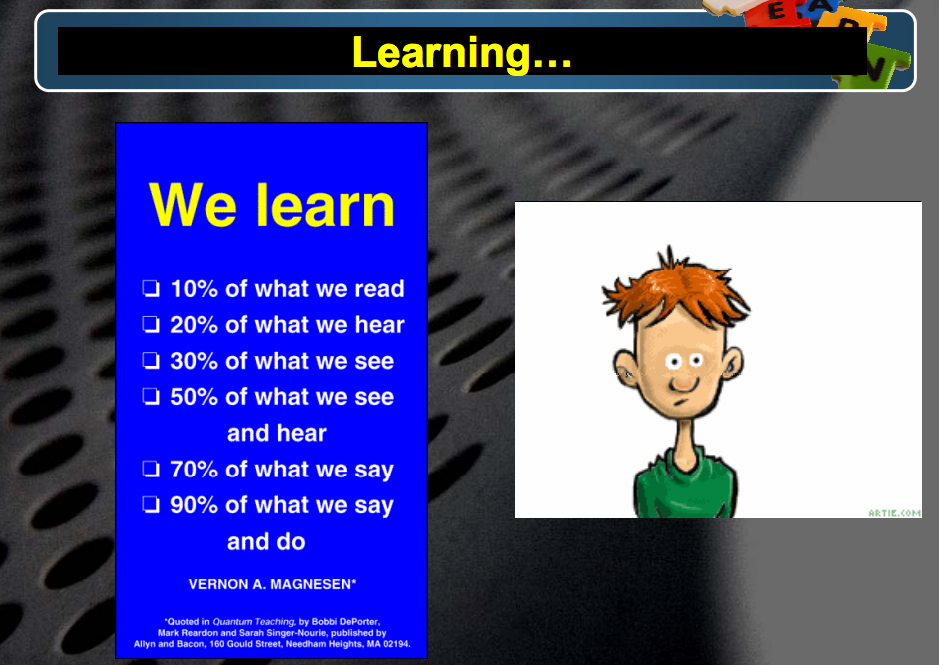
Why? You should incorporate kinesthetic learning into your classroom to support your student with ADHD because it will allow them to use their strengths in their learning. Student with ADHD will enjoy the learning process, retain more information, and feel more successful when they learn kinesthetically. 

Picture
Credit: M. Elia Flores M.Ed.,R.T. (R) http://www.blinn.edu/twe/radi/Teaching%20%20Learning%20Styles.pdf
When? Kinesthetic learning can be incorporated throughout all academic content areas and at all grade levels. ​
Kindergarten- 2nd Grade Kinesthetic Learning Opportunities
  • ​Math: 
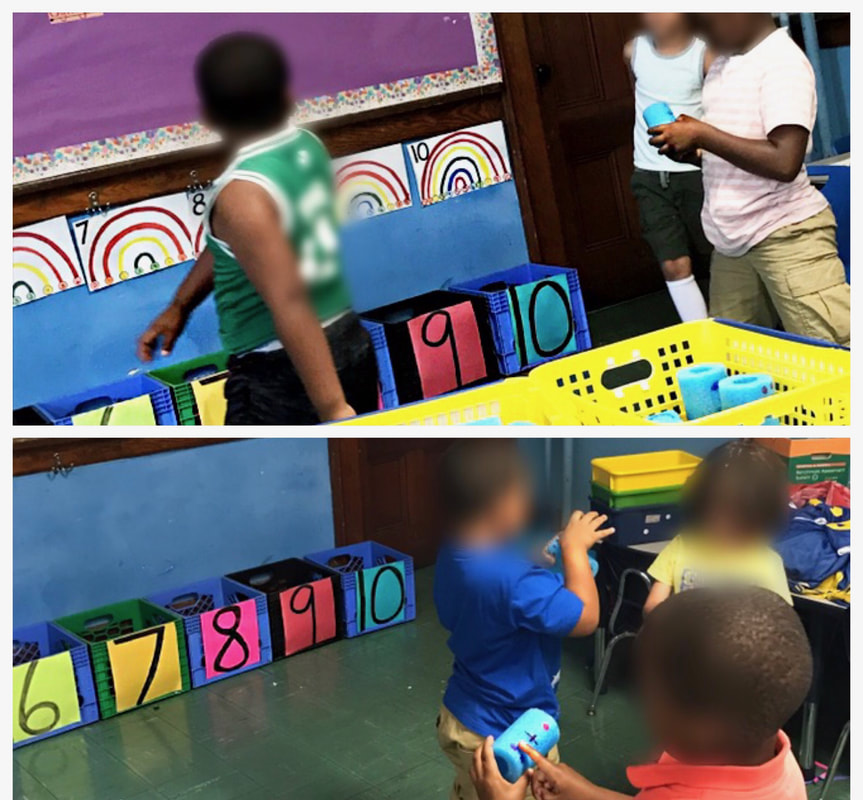
    • Activity: Noodle Math!
    • Age: Kindergarten, 1st, 2nd
    • Content Area: Math (Addition/Subtraction)
    • Type: Small Group Center

  • How it is played:
    • Students will are practice their addition and subtraction skills. Each noodle has an addition or subtraction problem on it.
    • Each student will take a noodle, solve the problem, and toss the noodle into the basket with the corresponding answer.
How it was made:
  1. Pool Noodles + Permanent Marker
  2. Milk Cartons + Paper + Permanent Marker + Tape
Picture
  • Literacy: 
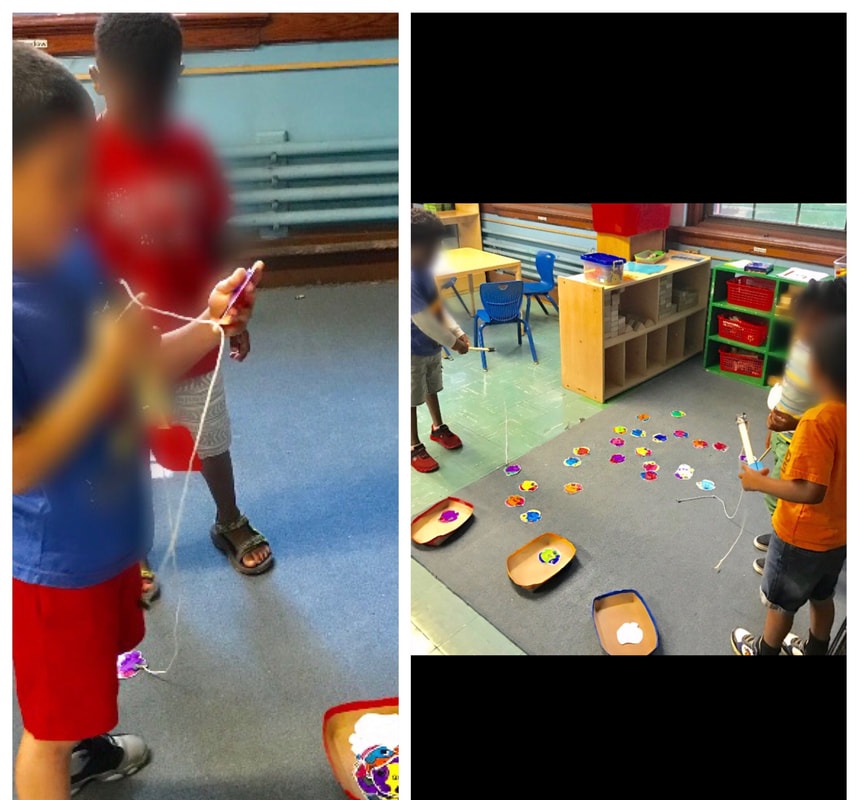
    • Activity: Fishing for Words
    • Age: Kindergarten, 1st, 2nd
    • Content: Literacy (sight/spelling words)
    • Type: Small Group Center

  • How it is played:
    • Students will use their magnetic fishing rod to "catch" a "fish". Once They catch the fish, they will read the word. If they get the word correct they will add it to their "fishing bucket". 
How it was made:
  1. "Fishing Rods"-  Spatulas, string, magnets, and hot glue
  2. "Fish words"- Fish stencil and current sight/spelling words! Add magnet tape to each fish.
  3. "Fishing Buckets"- Add colored tape to card board lunch trays.
Fishing For Words
3rd- 5th Grade Kinesthetic Learning Opportunities​
  • ​​Math: 
    • Activity: Measure the Room
    • Age: 3rd-5th grade
    • Content Area: Measurement, Estimation, Multiplication, Division
    • Type: independent/small group
​
  • How it is implemented:
    • Students will use different measuring tools to measure different objects and people around the room. This could be done in different measuring units and apply different math skills such as estimation, multiplication and division to compare different sizes of objects.
​​
  • Check out this video to see it done in the classroom! ​
  • Literacy: 
    • Activity: Role Playing
    • Age 3rd-6th Grade
    • Content Area: Reading Comprehension
    • Type: Small group/whole group
​
  • How it is implemented:
    • Students act out a chapter, poem or story they read. This will show what they comprehend and allow them to use their imagination, and body to create their learning experience. ​​
​​

​
  • Check out this video of third graders acting out poetry!
How? 
Changing your teaching approach can feel scary. Here are ten easy ways to incorporate kinesthetic learning into your everyday classroom:
​
​1. Provide Shake Breaks using GoNoodle or MeMoves

2. Don't sweat the small stuff! When your student is wiggling, tapping, or bobbing don't let it get to you! They aren't doing it to disturb you, but are doing it to self regulate.

3. Get a class trampoline! Allow students time to jump their jitters out before and after a time they are required to sit and focus for a long period.

4. Role play and act out new information!

5. Incorporate dance and song when they are learning a new concept. You can find a lot of guided dances on youtube that teach many curriculum concepts.

6. Try flexible seating! This can be as easy as allowing them to do their work on a clip board while lying down!

7. Provide manipulatives for paper based learning.

8. Incorporate project based learning 

9. Make sure they drink PLENTY of water!
​
10.  Teach them guided deep breathing and relaxation techniques.
Math Tips for Kinesthetic Learners: Page 1

Whole Group Kinesthetic Learning-- First Grade Phonics

Proudly powered by Weebly