Impact of Special Needs
  • BLOG 2017
  • IMPACT
    • History of Special Education Christina Pressley
    • INQUIRY >
      • RESEARCH AVENUES >
        • Marshall Memo
    • SYLLABUS >
      • Norms
      • Council for Exceptional Children
      • Flight Practice
      • Ladder of Feedback
      • Marshmallow Challenge
      • MeMoves!
      • National Teaching Norms
      • Scavenger Hunt
      • Unthinkables
  • FOUNDATIONS
    • Common Core >
      • Mathematics >
        • Math Graphic Organizers
        • Math: Subitizing and Ten Frames
        • Math Inclusion Resources and Strategies
      • Literacy >
        • Alphabet Awareness
        • Classroom Labels
        • Close Reading Strategies
        • The Daily Five
        • Dialogic and Guided Reading
        • Phonics Instruction
        • Phonological Awareness
        • Story Grammar Markers
        • Writing
      • TECHNOLOGY RESOURCES FOR LEARNING >
        • ACCESSIBLE INSTRUCTIONAL MATERIALS
        • Assistive Technology >
          • Assistive Technology Andrew
        • The Flipped Classroom in SPED
        • Science >
          • STEM
        • WEBSITES FOR LEARNING >
          • Web 2.0
          • cool tools
    • IEP >
      • Assessment
      • Terminology
      • Accommodations >
        • Assistive Technology >
          • Technology
          • AIM
        • MCAS Accommodations
      • Documents
      • Goals and Objectives
      • Transition Services >
        • Early Childhood Transition
      • Early Intervention
      • 504 Plans
    • INCLUSION >
      • Child Study Teams >
        • CST Report (Action Plans)
      • DCAP
      • RTI >
        • RTI in SLD Determination Lauren A
        • MA Tiered System of Supports
      • Observations
      • PALS: PEER ASSISTED LEARNING STRATEGIES
      • Para Educator
    • DISABILITY AWARENESS >
      • IRIS Resources STAR Legacy Modules
    • EDUCATIONAL STANDARDS >
      • 21st Century Skills
      • Common Core
      • IDEA >
        • Dear Colleague
        • ADA Americans with Disability Act
      • Special Education History >
        • Timelines in Special Education
    • FAMILY >
      • DIVERSITY
      • ADA and ADULTHOOD
      • Stigma in Special Needs in Latino Family Emily Burdick
  • TOPICS
    • Transgender Youth
  • LEARNING THEORIES
    • LEARNING THEORIES A-G >
      • ABA Jenna
      • All Kinds of Minds
      • Bloom's Taxonomy
      • Behaviorism
      • Bronfenbrenner’s Theory
      • Child Development
      • Cognitivism
      • Constructivism
      • GRIT
      • Growth Mindset
    • LEARNING THEORIES H-Z >
      • Kinesthetic Learning Eilish Reynolds
      • Learning Styles
      • Meaning Making
      • Motivation
      • Neuroscience
      • Building Relationships Katherine Bonilla
      • Social Learning Theory
      • Teaching for Understanding
      • Thinking Maps
      • UDL >
        • Assistive Technolog Jacqueline
        • UDL and the Common Core
        • UDL-Jenny/Lauren
      • Visible Thinking
  • DISABILITIES
    • AUTISM (ASD) >
      • Autism >
        • Autism Family Info Lindsey Blackman
        • Pink on the Spectrum Sara Cane
        • Autism Troy Sargent >
          • Autism and ABA Haley Award
          • Autism Janine Steinhauser
          • Autism James McDonough
        • Autism Rebecca Siegel
        • Autism and Language
        • Autism Kat
        • Autism and Adulthood
        • Autism in an Inclusive Classroom Kathryn N
        • Autism Dana Moody
        • Autism Non-Verbal Justin
      • ASD Resources
      • Autism-Nicky >
        • ABA in Autism Intervention Lauren C
      • Asperger's Syndrome Leeanne
    • COMMUNICATION >
      • Apraxia Victoria >
        • Apraxia Gabrielle D'Avolio
      • Communication Resources >
        • Expressive Language-Chelsey
      • Select Mutism
    • DEVELOPMENTAL DELAY >
      • Fine and Gross Motor Devel.-Denise >
        • Motor Articles
    • EMOTIONAL (BEHAVIOR) >
      • Bipolar Disorder Cailey >
        • Bipolar Disorder Caitlin Worthen
      • Behavior Resources
      • Mental Health Needs in College Peter Rakes
      • Relational Aggression Meghan Lederhos
      • Emotional Apps Katherine Bonilla
      • Trauma Supportive Practice Samantha Sinotte
    • HEALTH >
      • Cancer
      • ADHD and ADD >
        • ADHD Isabella Delmoral
        • ADHD Julia
        • ADHD Olivia Pizzi
        • ADD/ADHD >
          • ADHD Jenny/Lauren
          • ADHD Sarah Morgenthaler
      • Health Resources
    • INTELLECTUAL >
      • Acquired Brain Injury >
        • Intellectual Resources
      • Down Syndrome
      • Down Syndrome Jennifer Whitman
      • Prader-Willi Syndrome Samantha Curtis
    • NEUROLOGICAL >
      • Brain Development-Kate
      • Memory-Sarita
      • EXECUTIVE FUNTIONING >
        • Executive Functioning Disorder Laura Brady
      • Rett Syndrom Brycelyn
      • SENSORY PROCESSING DYSREGULATION >
        • SI Resources >
          • Sensory Integration-Steph >
            • SI Reference Articles
      • Fetal Alcohol Syndrome-Mary >
        • Fetal Alcohol Syndrome Elizabeth Watts
    • PHYSICAL >
      • Hearing Disability Rachel Jones
      • Physical Resources
      • Student Integration After Hospitalization Kathryn R
    • SENSORY >
      • HEARING >
        • Hearing Loss Yan Li Xu
        • Hearing Impairment Brianne Syring
        • Hearing Resources
        • Deaf and Hard of Hearing Brianna Normile
      • Sensory Processing Disorder Mikaela Newell
      • VISION >
        • Vision Resources
    • SPECIFIC LEARNING >
      • SLD Elizabeth Mossop
      • NVLD Nicole Snyder
      • LD Resources >
        • Dyscalculia Lily Chase-Lubitz
        • Dysgraphia Erin Bruce
        • Reading >
          • Dyslexia-Anthony >
            • Dyslexia Lily Montagna
            • Dyslexia Victoria Small
            • Dyslexia 2 Tiffany
            • Dyslexia Meghan
            • Dyslexia Colleen Talbot
          • Early Literacy Resources
          • LD and IDEA Issue
          • Reading by the Rules
        • Content
        • Math
        • Writing
        • Technology >
          • Reading Comprehension Strategies Meredith Chen
        • Teaching
    • TWICE EXCEPTIONAL >
      • Twice Exceptional Articles
      • Twice Exceptional Students Kelcy West
      • Twice Exceptional-Melissa
  • BEHAVIOR
    • CLASSROOM MANAGEMENT >
      • A-J >
        • 21st Century Learning
        • Behavior Modification >
          • Behavior Management Jon Weinberger
        • Bloom's Taxonomy
        • Circle of Friends
        • Collaborative Problem Solving
        • Culturally Responsive Pedagogy
        • The Daily Five
        • Differentiated Instruction
      • K-Z >
        • Kids and War
        • MeMoves!
        • Responsive Classroom
        • Socia Skills Curriculums Jessica Fox
        • Social & Emotional Learning Carol Yourman
        • Social Thinking
        • Strategies for Aggression-Jim
        • Universal Design for Learning
    • PREVENTING BULLYING >
      • Good Play Project
  • PROJECTS 2018
    • INQUIRY >
      • A-K
      • L-Z

The Role of Response to Intervention (RTI) in the Determination of Specific Learning Disabilities (SLD)

Audio Introduction
Summary
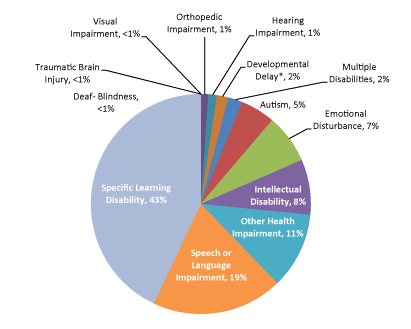
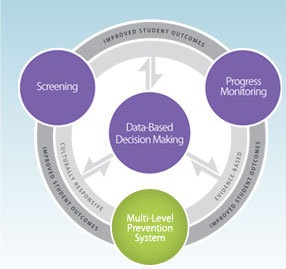
Specific Learning Disabilities (SLD) are neurological disorders that impacts how the brain manipulates information and accounts for the largest percentage of school-age disability diagnoses. Response to Intervention (RTI) is a multi-tiered preventive system designed to ensure that all students are receiving appropriate instruction to maximize academic achievement and minimize problem behaviors. RTI includes screening of students to identify students at risk, ongoing progress monitoring, and data collection to determine students’ responsiveness to intervention. To help determine eligibility of SLD the Individual with Disabilities Education Act (IDEA) encourages models that implement RTI frameworks to most effectively target students’ needs, provide quantifiable and quantitative data, and overall reduce the number of SLD cases. However, this is heated controversy. The RTI frameworks are still being developed and can be easily influenced by external factors. Yet, IDEA states that RTI is just one component of evaluation and that the benefits ultimately outweigh the cons. 


Specific Learning Disability
IDEA Federal Defintion of Specific Learning Disability (34 CFR 300.8 Child with a Disability)  
(i) General. Specific learning disability (SLD) means a disorder in one or more of the basic psychological processes involved in understanding or in using language, spoken or written, that may manifest itself in the imperfect ability to listen, think, speak, read, write, spell, or to do mathematical calculations, including conditions such as perceptual disabilities, brain injury, minimal brain dysfunction, dyslexia, and developmental aphasia”.


(ii)Disorders not included. The term does not include learning problems that are primarily the result of visual, hearing, or motor disabilities, of mental retardation, of emotional disturbance, or of environmental, cultural, or economic disadvantage.


Types of Disorders Included
Visual Processing Disorder
Auditory Processing Disorder
Non-Verbal Learning Disorder
Dyslexia
Dyspraxia
Dysgraphia
Dysclaculia

Causes and Symptoms 
There is no known cause of Specific Learning Disabilities but it is thought to be linked to:
- Heredity
- Pre-natal and Birth Injuries
- Serious Illness or Head Injury 
- Exposure to Toxins or Other Environmental Factors During Infancy and Early Childhood


Symptoms vary on a case-to-case basis. If your child is struggling to listen, think, read, write, spell, or do mathematical calculations and you suspect a LD, check out these resources to research common symptoms of specific disabilities and consult with your child's teacher. 

Picture
Flow Chart of Possible LD Symptoms
Your browser does not support viewing this document. Click here to download the document.

Impact on Learning 

Picture
Picture
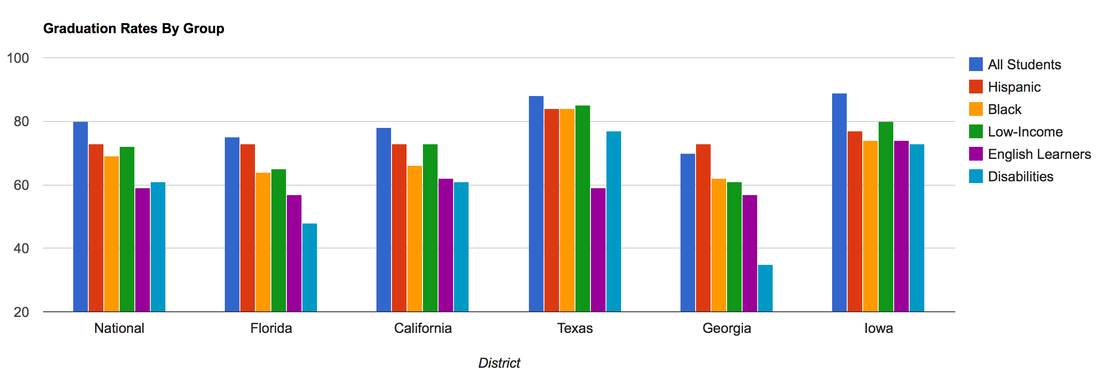
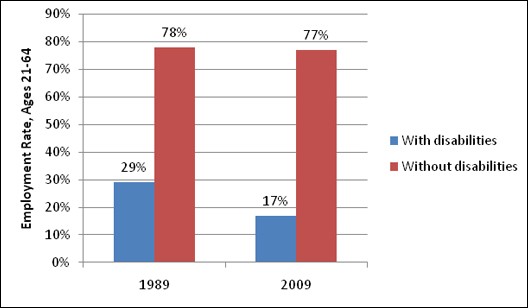
Students with SLD's account for the largest percentage of disabilities and have the lowest graduation rate
Picture
SLD Can Impact
  • Memory
  • Organization
  • Task Completion
  • Coordination
  • Impulsivity
  • Communication 
  • Following Directions
  • Self-Advocacy Skills

Picture
LD Teaching Strategies in the Classroom

  • Text Decoding and Comprehension
  • Fluency
  • Math Problem Solving and Calculation
  • Oral Expression

Interventions and Resources
From National Center for Learning Disabilities 
  • sequencing 
  • drill-repetition-practice segmentation 
  • directed questioning and responses
  • control of task difficulty
  • use of technology 
  • teacher-modeled problem solving
  • small-group instruction
  • strategy cues 
Picture
Cognitive Strategy Instruction
Picture
Links to Resources about Research, Advocacy, Strategies, and Professional Organizations
Picture
Interventions for Students with Learning Disabilities
ld_fact_sheet.pdf
File Size: 144 kb
File Type: pdf
Download File


Response to Intervention
National Council on Response to Intervention Definition of RTI:
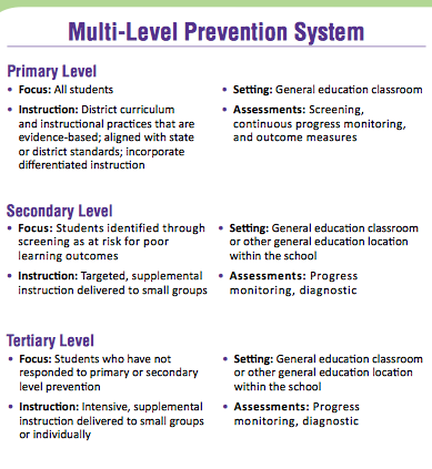
"Response to intervention integrates assessment and intervention within a multi-level prevention system to maximize student achievement and to reduce behavioral problems. With RTI, schools use data to identify students at risk for poor learning outcomes, monitor student progress, provide evidence-based interventions and adjust the intensity and nature of those interventions depending on a student’s responsiveness, and identify students with learning disabilities or other disabilities."


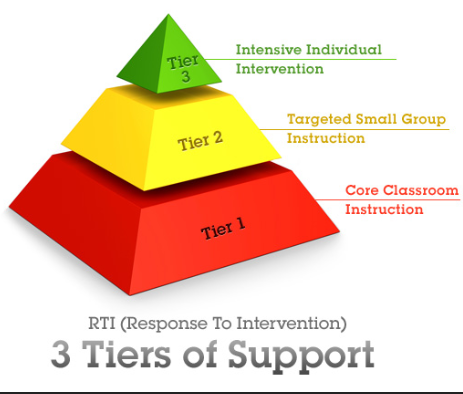
Three Tier Model

Picture
Picture
Click to learn more about RTI's Multi-Tiered Prevention System

Picture
RTI Tier 1, 2, and 3 Strategies for Teachers

Behavior 
What are Positive Behavior Interventions & Supports (PBIS)?
  • Looks at external factors at the root of problem behavior as opposed to labeling the student as inherently "bad"
  • Evidence-based behavioral intervention designed for school personnel to foster community and to "enhance academic and social behavior"
  • Establishes school-wide behavioral expectations that are continually referenced by staff and students
  • Emphasizes the use of logical consequences rather than punitive measures
  • Encourages individual and school-wide rewards to "acknowledge appropriate behavior"
  • The Social Side of RTI: Ensures all students receive the appropriate social instruction and supports necessary to succeed in school
Your browser does not support viewing this document. Click here to download the document.
This study examines the impact of PBIS on Organizational Health ( resource influence, staff affiliation, academic emphasis, collegial leadership, and institutional integrity) of Elementary Schools. It was found that schools that had implemented PBIS had a overall stronger, "friendly and collboraitve" community for students and staff and increased resource influence. 

Your browser does not support viewing this document. Click here to download the document.

Resources 

what_is_rti_2010_07_14_placemat-2.pdf
File Size: 985 kb
File Type: pdf
Download File

Picture
A Close Look at Progress Monitoring
Picture
Picture
rtiessentialcomponents_042710.pdf
File Size: 890 kb
File Type: pdf
Download File

Your browser does not support viewing this document. Click here to download the document.

Eligibility and Determination of SLD

In This Summary:
  • Sections of IDEA that directly address the implementation of RTI will be highlighted and clarified
  • The fundamentals components of RTI will be connected to reducing the number of SLD cases
  • The RTI controversy will be examined
  • Additional resources will be posted to continue research and exploration
Your browser does not support viewing this document. Click here to download the document.

300.307
1. Add procedures for identifying children with specific learning disabilities.

A State must adopt, consistent with 34 CFR 300.309, criteria for determining whether a child has a specific learning disability as defined in 34 CFR 300.8(c)(10). In addition, the criteria adopted by the State:

  • Must not require the use of a severe discrepancy between intellectual ability and achievement for determining whether a child has a specific learning disability, as defined
    in 34 CFR 300.8(c)(10);

  • Must permit the use of a process based on the child’s response to scientific, research- based intervention; and

  • May permit the use of other alternative research-based procedures for determining whether a child has a specific learning disability, as defined in 34 CFR 300.8(c)(10). 


This Means:
  • IDEA does not specifically support one model, but strongly encourages models that incorporate the elements of RTI
  • RTI is a research-based and evidence based intervention that includes three fundamental components to "deliver a system of instructional interventions of increasing intensity" to enhance the educational outcomes for students
Picture

3. Add criteria for determining the existence of a specific learning disability.

The group described in 34 CFR 300.306 may determine that a child has a specific learning disability, as defined in 34 CFR 300.8(c)(10), if:

The child does not make sufficient progress to meet age or State-approved grade-level standards in one or more of the areas identified in 34 CFR 300.309(a)(1) when using a process based on the child’s response to scientific, research-based intervention; or the child exhibits a pattern of strengths and weaknesses in performance, achievement, or both, relative to age, State-approved grade-level standards, or intellectual development, that is determined by the group to be relevant to the identification of a specific learning disability, using appropriate assessments, consistent with 34 CFR 300.304 and 300.305; and the group determines that its findings under 34 CFR 300.309(a)(1) and (2) are not primarily the result of:

o A visual, hearing, or motor disability; o Mental retardation;
o Emotional disturbance;
o Cultural factors;
o Environmental or economic disadvantage; or o Limited English proficiency. 


To ensure that underachievement in a child suspected of having a specific learning disability is not due to lack of appropriate instruction in reading or math, the group must consider, as part of the evaluation described in 34 CFR 300.304 through 300.306:

  • Data that demonstrate that prior to, or as a part of, the referral process, the child was provided appropriate instruction in regular education settings, delivered by qualified personnel; and

  • Data-based documentation of repeated assessments of achievement at reasonable intervals, reflecting formal assessment of student progress during instruction, which was provided to the child’s parents. 

This Means: 
  • RTI is part of a comprehensive evaluation; age, grade-level standards, and intellectual development must also be considered
  • RTI can play a pivotal role in providing appropriate instruction for children at risk
  • Furthermore, the ongoing progress monitoring, data collection, and assessments provide substantial data for determining SLD's
  • Parents must be referred if their child is being referred for evaluation or is receiving RTI


4. Describe the required observation.
The public agency must ensure that the child is observed in the child’s learning environment (including the regular classroom setting) to document the child’s academic performance and behavior in the areas of difficulty.

The group described in 34 CFR 300.306(a)(1), in determining whether a child has a specific learning disability, must decide to:
  • Use information from an observation in routine classroom instruction and monitoring of the child’s performance that was done before the child was referred for an evaluation; or
  • Have at least one member of the group described in 34 CFR 300.306(a)(1) conduct an observation of the child’s academic performance in the regular classroom after the child has been referred for an evaluation and parental consent, consistent with 34 CFR 300.300(a), is obtained. 


This Means:
  • Data from RTI can be used for student before referral for evaluation and can be used for comparison if the team decides to conduct an observation during the evaluation process
Your browser does not support viewing this document. Click here to download the document.

Controversy
Sourced From: 
IDEA Partnership
Adavantages:
  • Provides instructional assistance in a timely fashion 
  • Helps ensure a student’s poor academic performance is not due to poor instruction or inappropriate curriculum 
  • Informs teacher and improves instruction because assessment data are collected and closely linked to interventions 
Concerns:
  • Current “wait to fail” model- Waiting for students to "fail" before receiving help; this does not usually emerge until later grades
  • Misidentification- Fear that students will be inaccurately diagnosed as SLD
  • Disproportionality (Gender, Age, Race)

Response(s) to Concerns:

  • There should be alternate ways to identify individuals with SLD
                 Including: achievement testing, history, and observations of the child
  • Response to quality intervention is the most promising method of alternate identification and can both promote effective practices in schools and help to close the gap between identification and treatment. 
  • Any effort to scale up response to intervention should be based on problem solving models that use progress monitoring to gauge the intensity of intervention in relation to the student’s response to intervention. 
  • Problem solving models have been shown to be effective in public school settings and in research.

However:
  • As cited by the research articles below the RTI frameworks are still being developed. While there are numerous supports for reading, math is only in the beginning stages of being addressed. 
  • The RTI frameworks has good intentions but can be easily influenced by external factors 

                Including: Trained Professionals, Degree of Implementation, and           
                Availability of Resources, and Familial Involvement 


On the right hand side is a case study looking at two instances where RTI was implemented to enhance educational outcomes and evaluate its level of success. Below it are three research articles that supports and opposes RTI- one examines referral rates of RTI and SLD and the other is an overall critique of the role of RTI in the SLD identification process. The third looks at RTI as a boost to CA low-performing schools. 


Your browser does not support viewing this document. Click here to download the document.

In Opposition of:
The Effects of Response to Intervention on Referral Rates for Special Education Services
File Size: 176 kb
File Type: pdf
Download File

RESPONSIVENESS TO INTERVENTION AND THE IDENTIFICATION OF SPECIFIC LEARNING DISABILITY: A CRITIQUEAND ALTERNATIVE PROPOSAL
File Size: 1557 kb
File Type: pdf
Download File


In Support of:
65067446-2.pdf
File Size: 222 kb
File Type: pdf
Download File


Case Studies and Resources
Click on photo to read more about each student 
and their experience with RTI
Picture
MA DOE SLD Eligibility Requirements and Forms

Picture
Picture
Proudly powered by Weebly