Dyslexia (for students and parents)
|
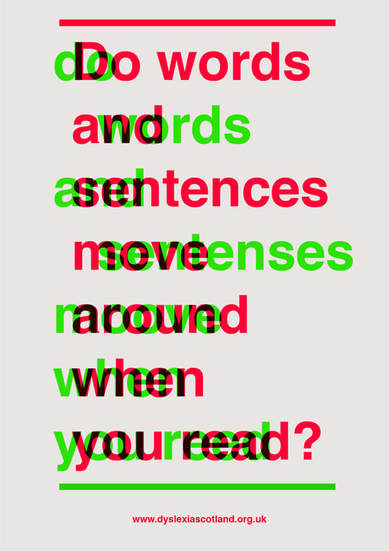
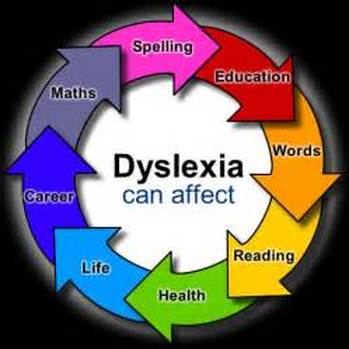
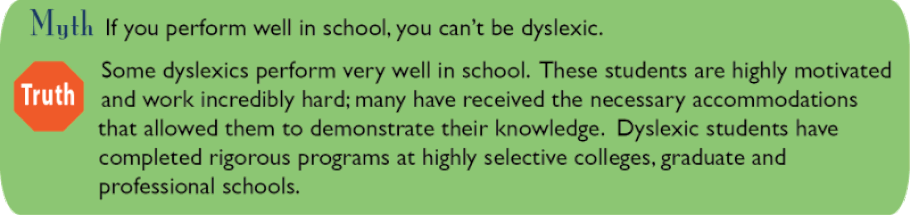
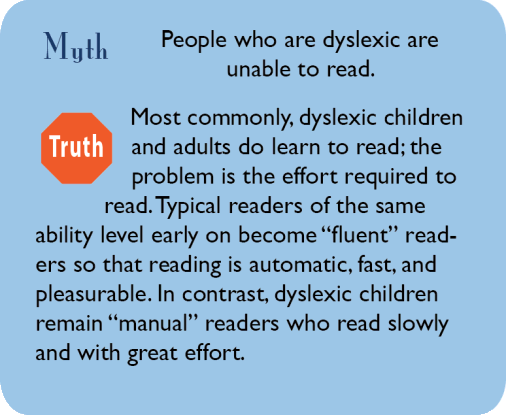
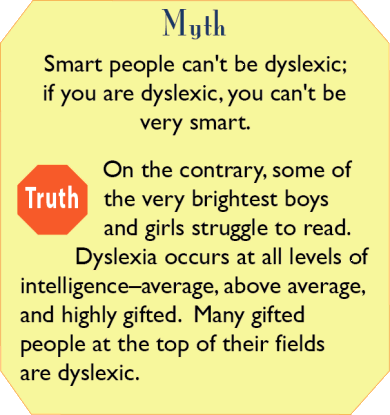
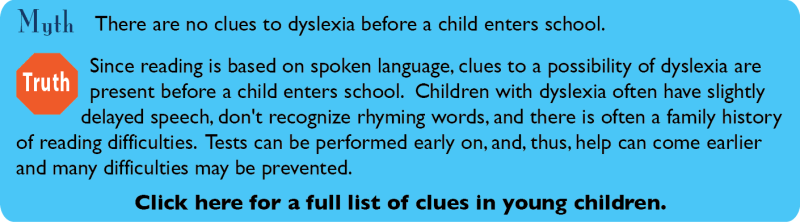
Students with dyslexia appear bright, intelligent, and articulate, however they really struggling readers. Dyslexia is an inherited and lifelong learning difference that primarily affects students phonological awareness, verbal memory, verbal processing speed, as well as, fluent reading and spelling. Students with dyslexia have trouble matching the letters seen on the page to the sounds those letters (or combination of letters) make. If a child struggles with dyslexia they spend much more time decoding and manipulating the language. Dyslexia can effect a students social and emotional aspects of life as well, including their confidence, and understanding of social cues. Although there is no cure for dyslexia, it has been proven that certain interventions can help support the students. Many students with dyslexia are very creative, have strong people skills, amazing visual abilities, and will find very successful jobs, however their time in school will be very difficult.
|
|
|
Causality:
Behavior, Health, Development and Personality
|
|
Social Emotional Effects:
Feels dumb; has poor self-esteem; hides or covers up weaknesses with ingenious compensatory strategies; easily frustrated and emotional about school reading or testing. Labeled lazy, dumb, careless, immature, “not trying hard enough,” or “behavior problem.” Seems to “Zone out” or daydream often; gets lost easily or loses track of time. |
|
Academics
|
Writing and Motor Skills
|
Vision, Reading, and Spelling
|
|
Math and Time Management
|
Memory and Cognition
|
|
|
|
Strategies for Students with Dyslexia:
While there is no cure for dyslexia, there are strategies to help students with dyslexia thrive in the classroom.
Listening to reading options, iPads for textbooks to help decode words, work in small groups to build specific strategies
Learns best through hands-on experience, demonstrations, experimentation, observation, and visual aids.
Comprehension and instructional strategies for before and after reading
Orton Gillingham interventions (shown in the video above) - successfully teaches letters and sounds, uses hearing, seeing, and speaking
Classroom accommodations (IEPs) oral testing, listening to reading, pull out tutoring and supports, extended time for testing, pull out testing for less distractions, and grade on the content, not on spelling and handwriting
While there is no cure for dyslexia, there are strategies to help students with dyslexia thrive in the classroom.
Listening to reading options, iPads for textbooks to help decode words, work in small groups to build specific strategies
Learns best through hands-on experience, demonstrations, experimentation, observation, and visual aids.
Comprehension and instructional strategies for before and after reading
Orton Gillingham interventions (shown in the video above) - successfully teaches letters and sounds, uses hearing, seeing, and speaking
Classroom accommodations (IEPs) oral testing, listening to reading, pull out tutoring and supports, extended time for testing, pull out testing for less distractions, and grade on the content, not on spelling and handwriting
|
|
|
|
Alternative schools for students with Dyslexia
There are independent schools around North America that specialize in teaching students with specific learning disabilities such as dyslexia.
Examples of schools in the Northeast
The Carroll School - Lincoln, MA
The history of The Carroll School dates back to 1967 when Dr. Edwin Cole and a small group of concerned individuals founded a special school for children with language-based learning differences. Today, Carroll is a thriving community helping students to value their differences and remediate their learning difficulties.
Eagle Hill School - Greenwich, CT, Hardwick, MA and Southport, CT
Eagle Hill School helps children with language-based learning disabilities acquire the academic and social skills necessary for transition to a traditional learning environment. Approximately 252 students, ages 6-16, enjoy an educational experience that is skills rather than grade-driven. Small classrooms ensure that each child receives an extraordinarily customized education.
Forman School - Litchfield, CT
Forman is a dynamic community where students learn to recognize their own merit and develop an appreciation for challenges as opportunities. Faculty nurtures growth and a love of learning in a culture of caring. A Forman education provides the foundation for a lifetime of personal achievement and service to others.
Landmark School - Beverly, MA
Landmark was founded by Charles “Chad” Drake with the goal of educating students whose reading, writing, spelling, and mathematical skills did not match their thinking and problem-solving capacities. Today, Landmark is recognized internationally as a leader in the field of language-based learning disabilities.
Windward School - White Plains, NY
Windward is a coeducational, independent day school dedicated to providing a proven instructional program for children with language-based learning disabilities. The multisensory curriculum is designed for students of average to superior intelligence who can benefit from the unique educational experience provided.
Examples of schools in the Northeast
The Carroll School - Lincoln, MA
The history of The Carroll School dates back to 1967 when Dr. Edwin Cole and a small group of concerned individuals founded a special school for children with language-based learning differences. Today, Carroll is a thriving community helping students to value their differences and remediate their learning difficulties.
Eagle Hill School - Greenwich, CT, Hardwick, MA and Southport, CT
Eagle Hill School helps children with language-based learning disabilities acquire the academic and social skills necessary for transition to a traditional learning environment. Approximately 252 students, ages 6-16, enjoy an educational experience that is skills rather than grade-driven. Small classrooms ensure that each child receives an extraordinarily customized education.
Forman School - Litchfield, CT
Forman is a dynamic community where students learn to recognize their own merit and develop an appreciation for challenges as opportunities. Faculty nurtures growth and a love of learning in a culture of caring. A Forman education provides the foundation for a lifetime of personal achievement and service to others.
Landmark School - Beverly, MA
Landmark was founded by Charles “Chad” Drake with the goal of educating students whose reading, writing, spelling, and mathematical skills did not match their thinking and problem-solving capacities. Today, Landmark is recognized internationally as a leader in the field of language-based learning disabilities.
Windward School - White Plains, NY
Windward is a coeducational, independent day school dedicated to providing a proven instructional program for children with language-based learning disabilities. The multisensory curriculum is designed for students of average to superior intelligence who can benefit from the unique educational experience provided.
Links for Parents and Teachers